After my hitchhike to the North Cape, I decided I needed to come back to Lofoten. Twelve days in July 2026 on the Lofoten islands with friends: a three-day traverse across the mountains, wild camping at Kvalvika, the ridge above Svolvær, more fishing than planned, and a €65 helicopter flight from Værøy back to the mainland.
Arrival: Bodø to Moskenes
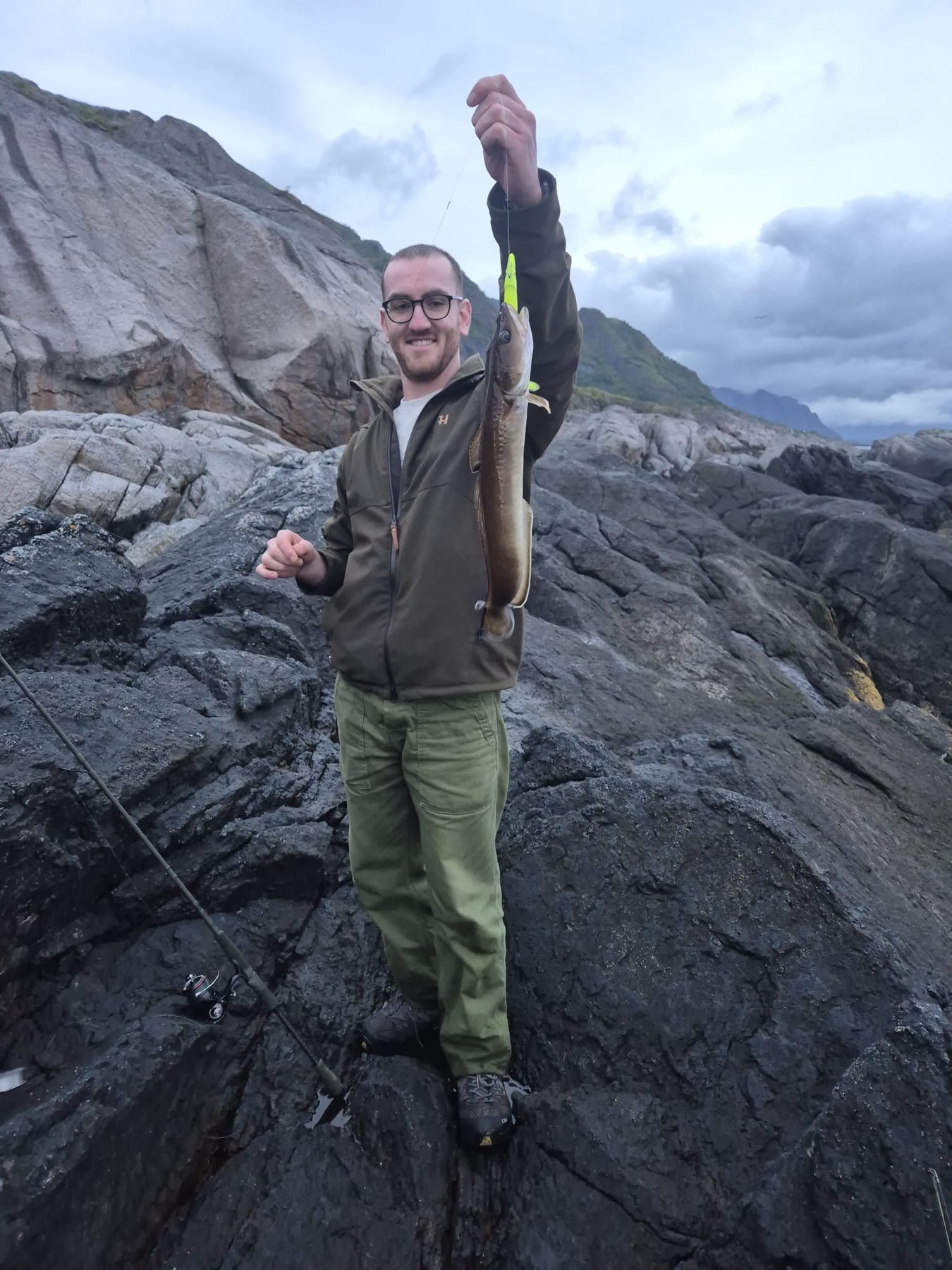
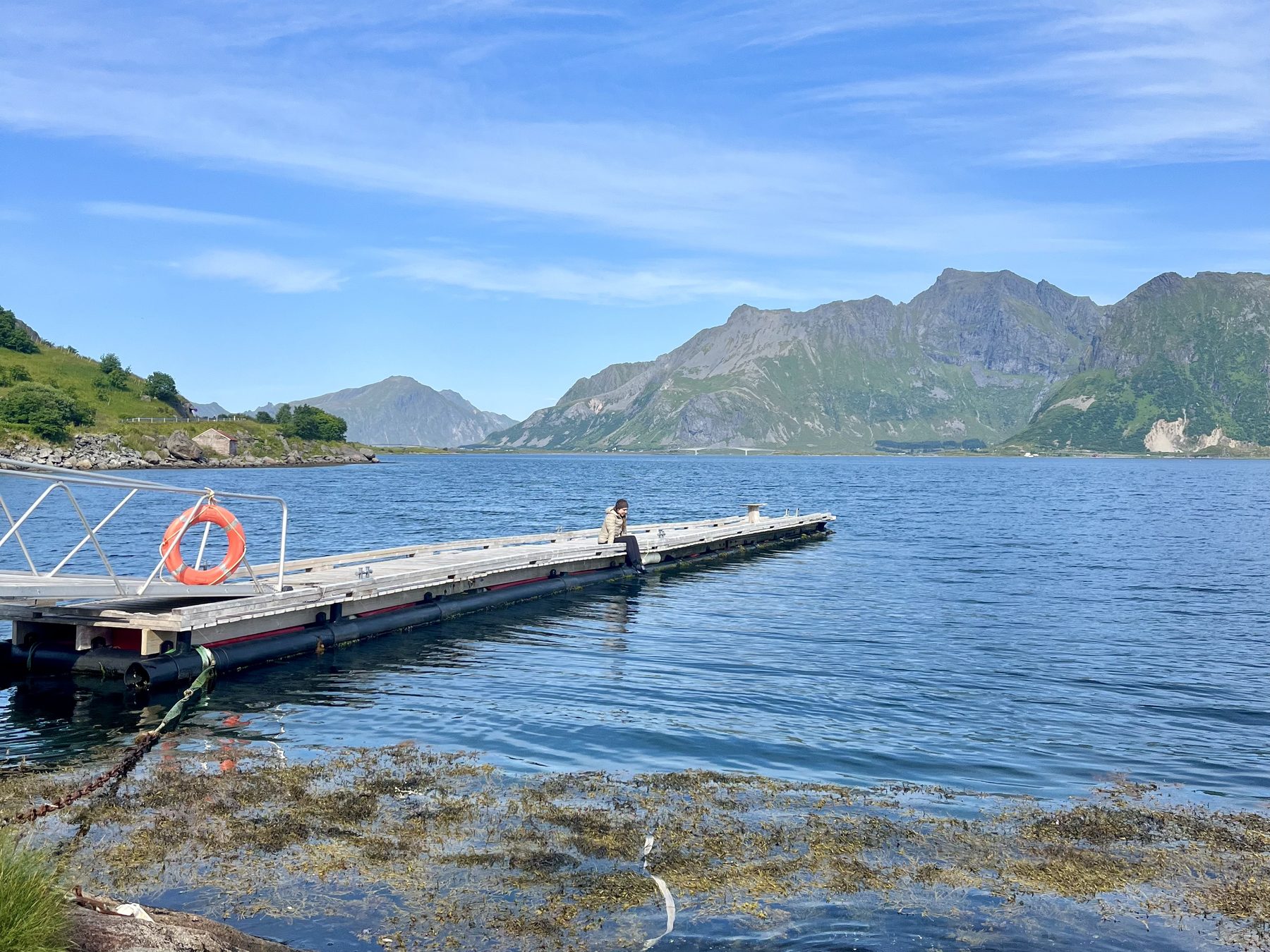
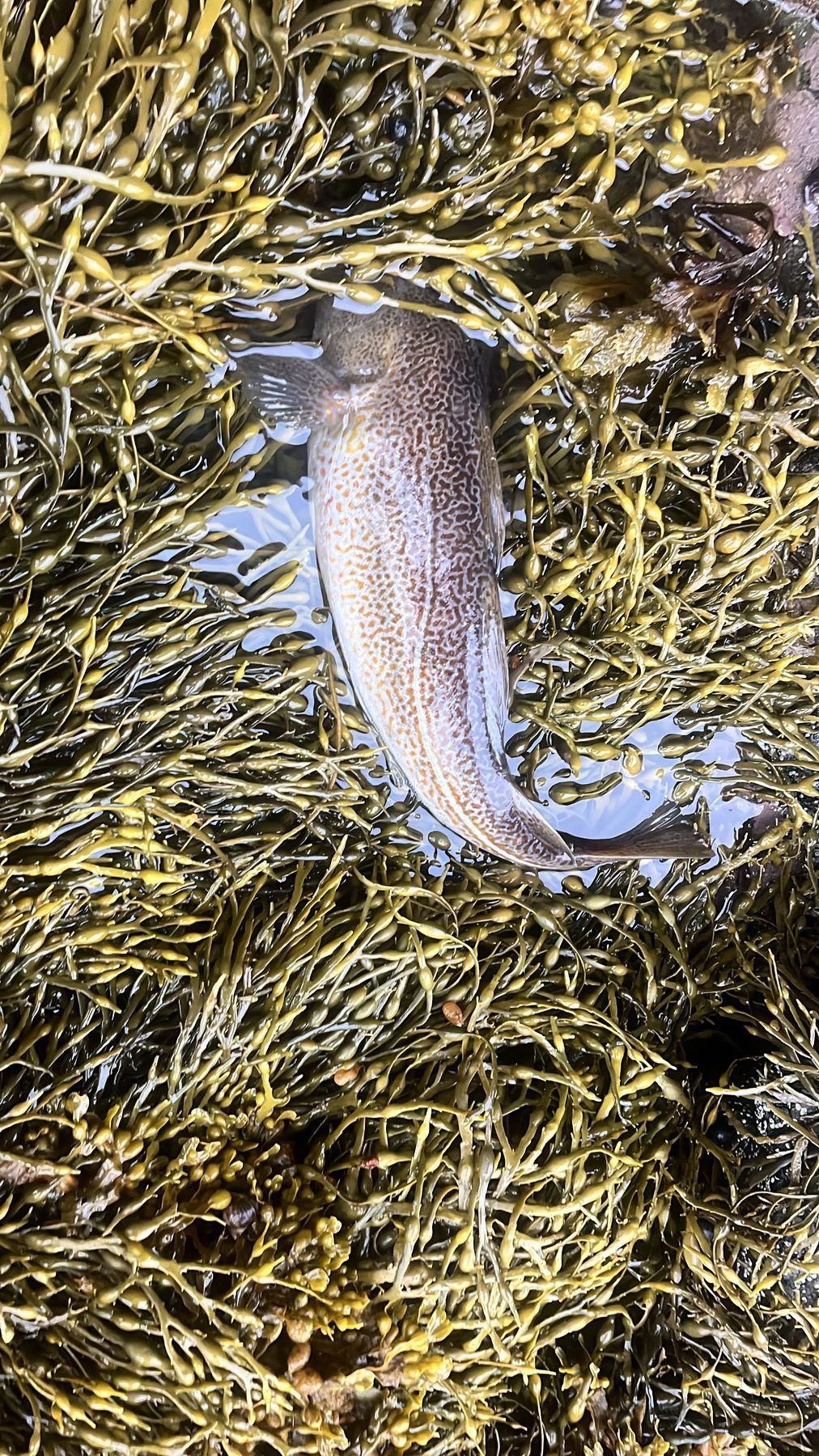
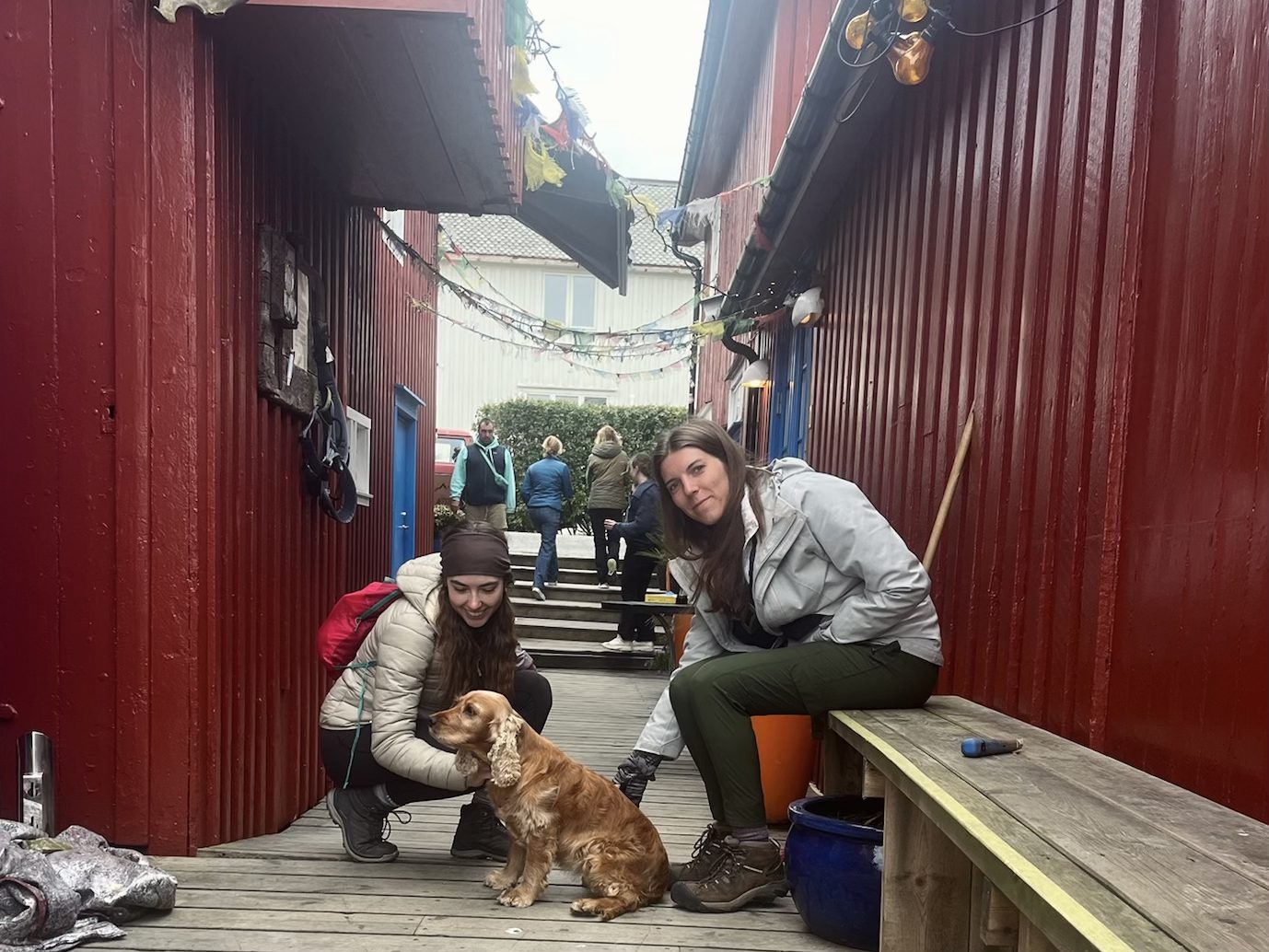
We landed in Bodø on Friday afternoon and went straight onto the ferry to Moskenes, a crossing of about three and a half hours that is free for passengers without a vehicle, like us. We reached the campsite that same evening, and the island gave us a welcome right away: our first fishing session, where we pulled out an eel-like saltwater fish. A good start, and a midnight snack before the trip had properly begun.
Reine to the hills: the traverse begins
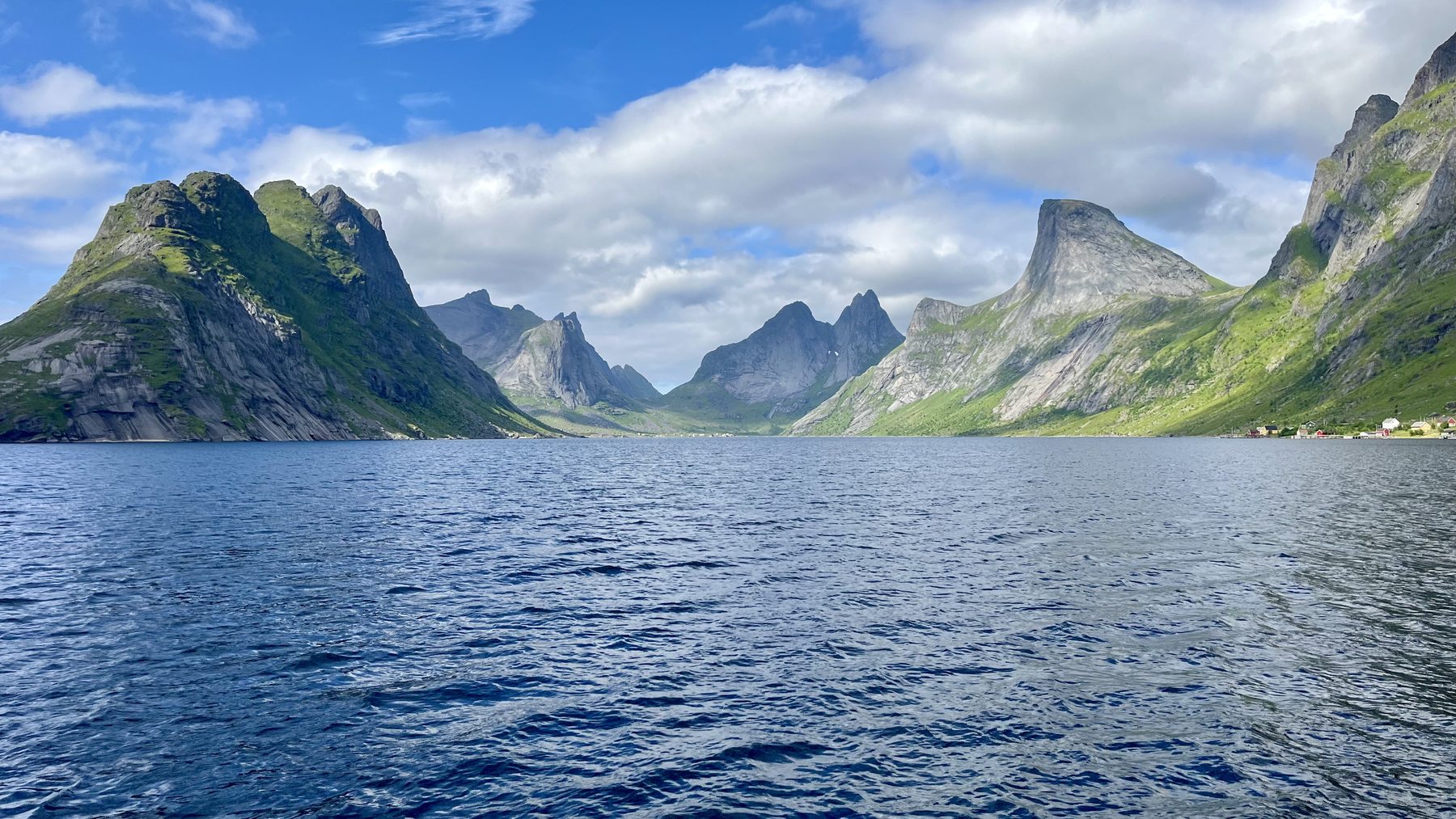
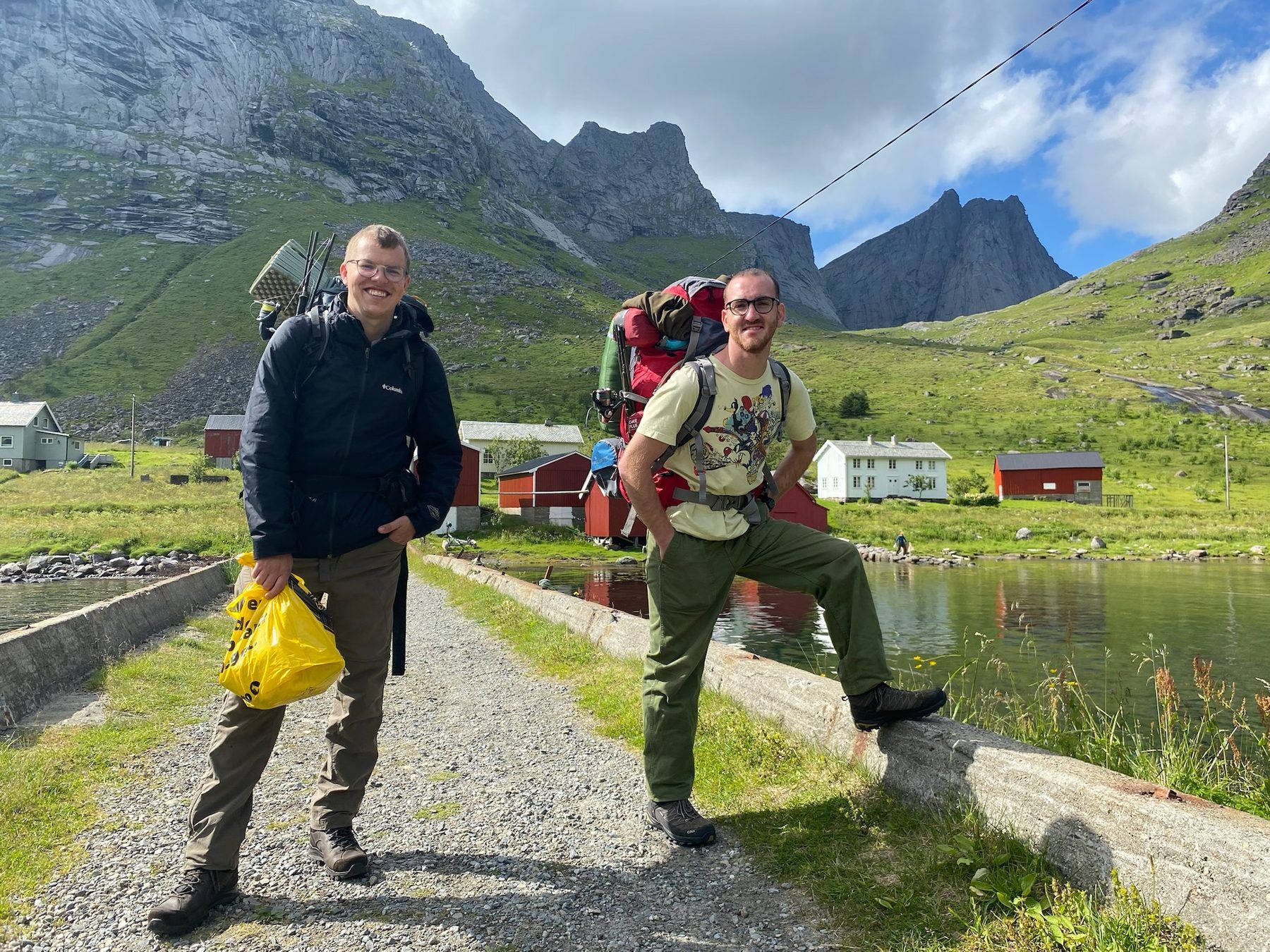
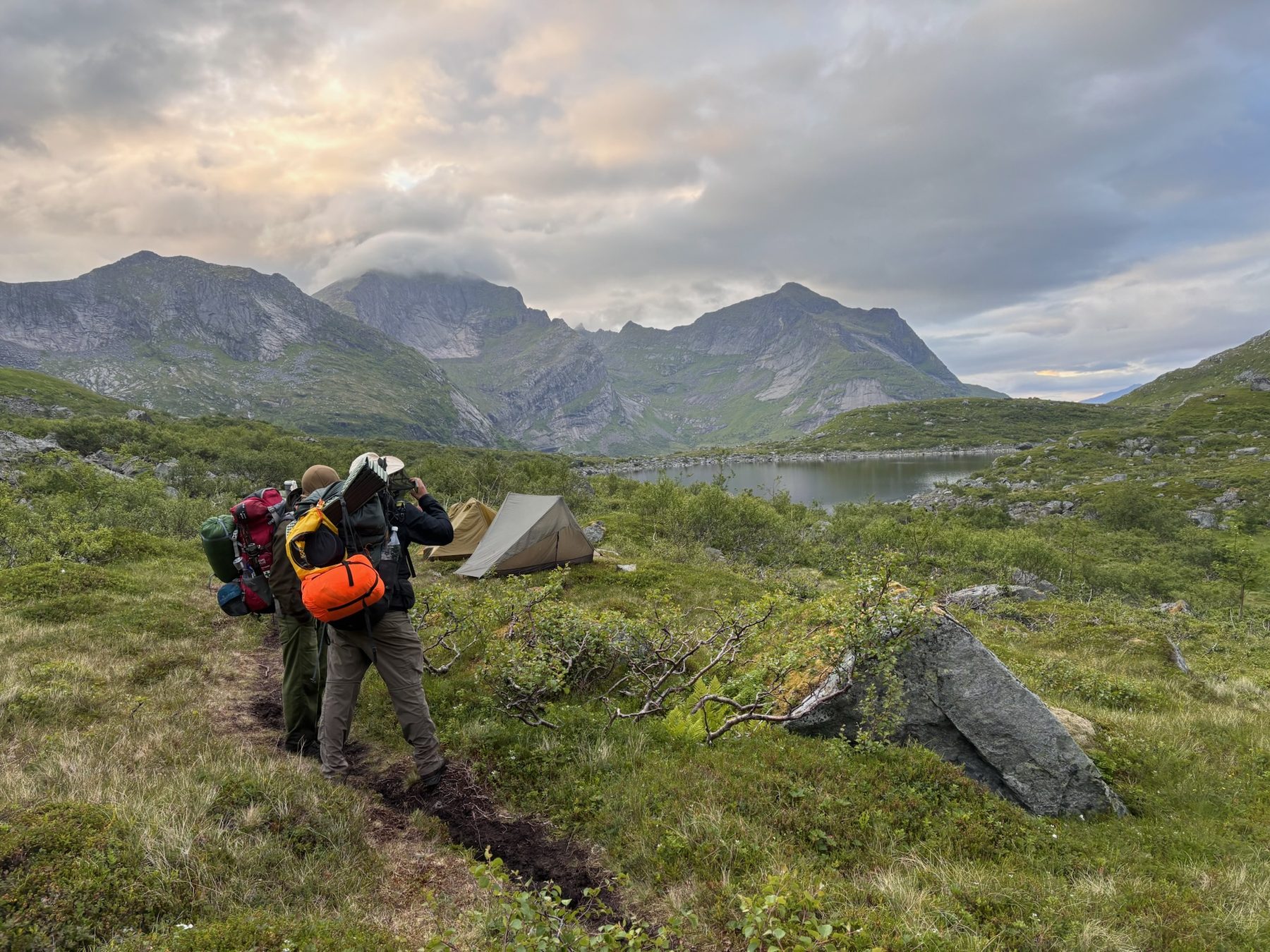
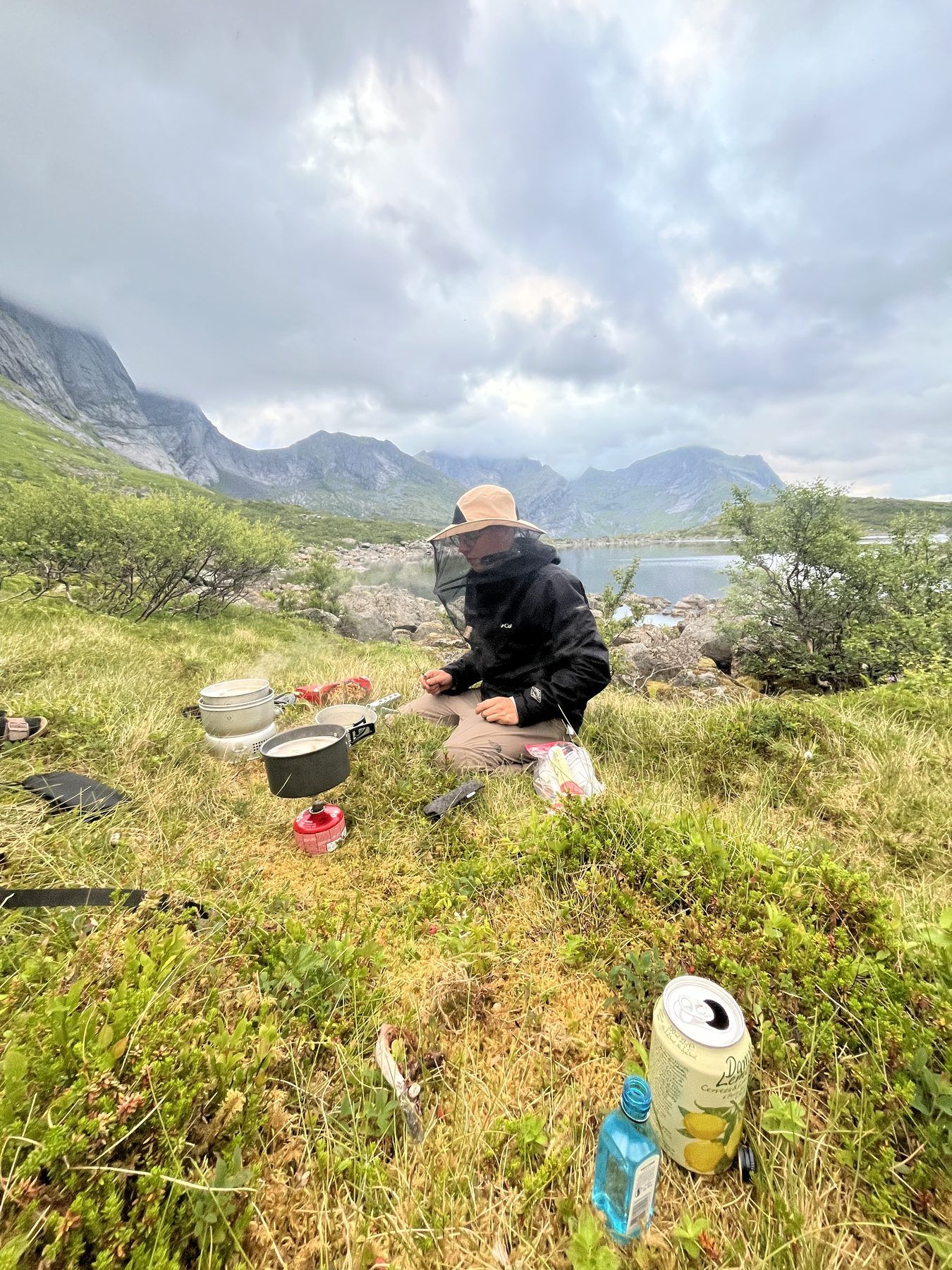
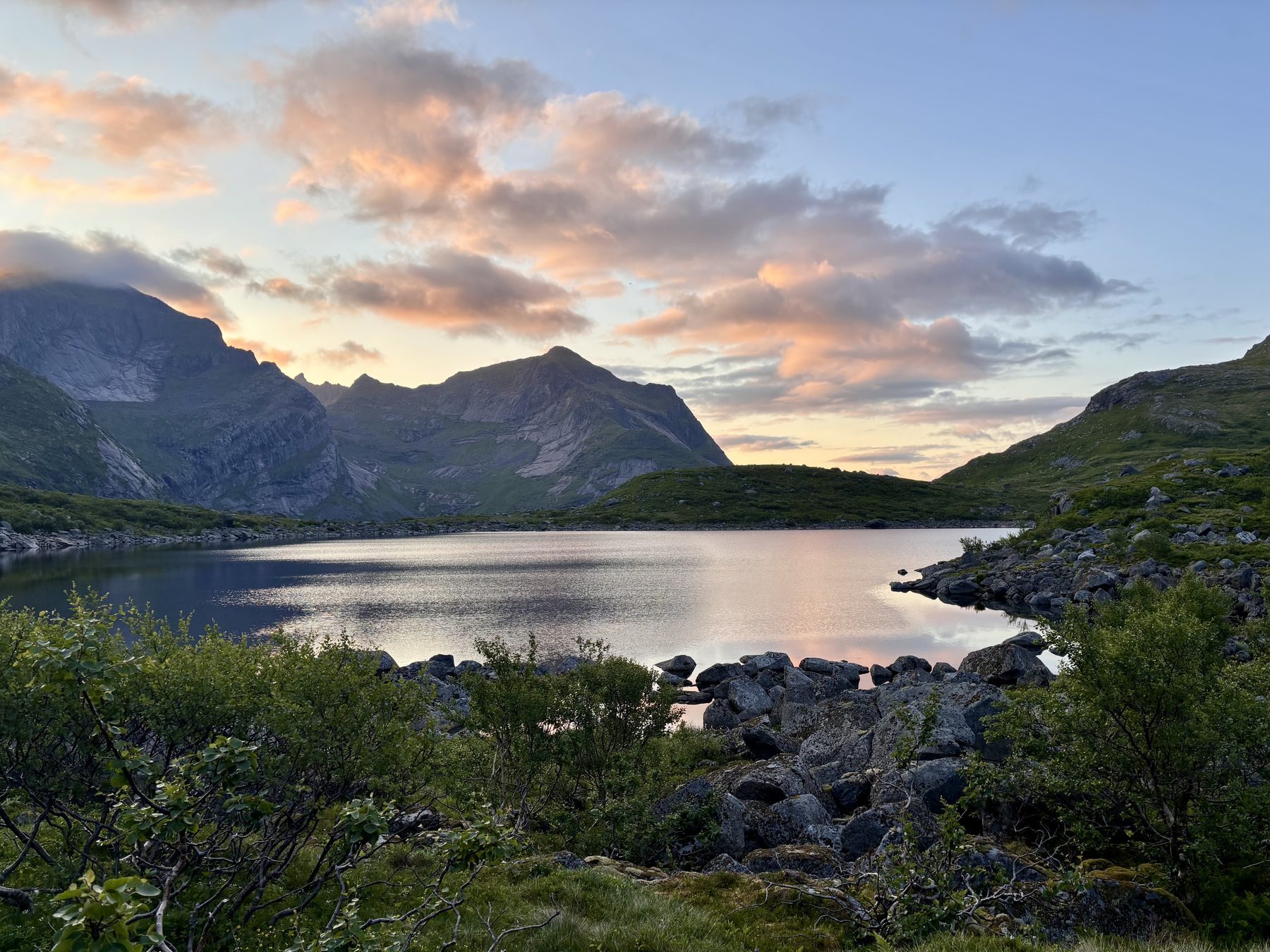
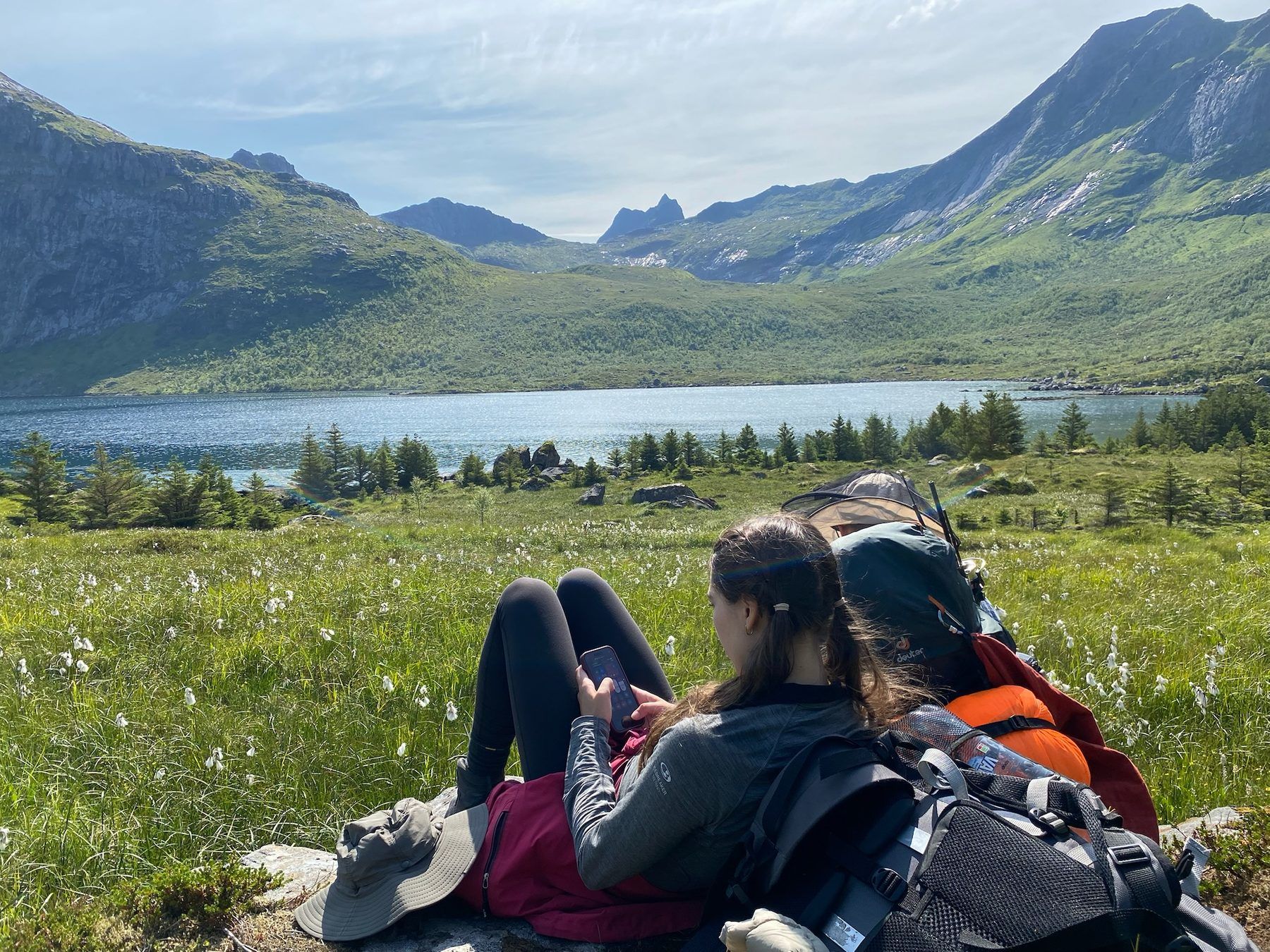
On Saturday my German friend joined us, which made four. We took the ferry from Reine into the fjords to Kirkefjord and started our three-day crossing of the Lofoten traverse. It was a tough first day, because we only started around 3 pm and had a long push ahead. We finally reached the lake Fageråvatnet up in the mountains and camped there, tired but glad to have made it, and experienced our first midnight sun.
Kvalvika Beach
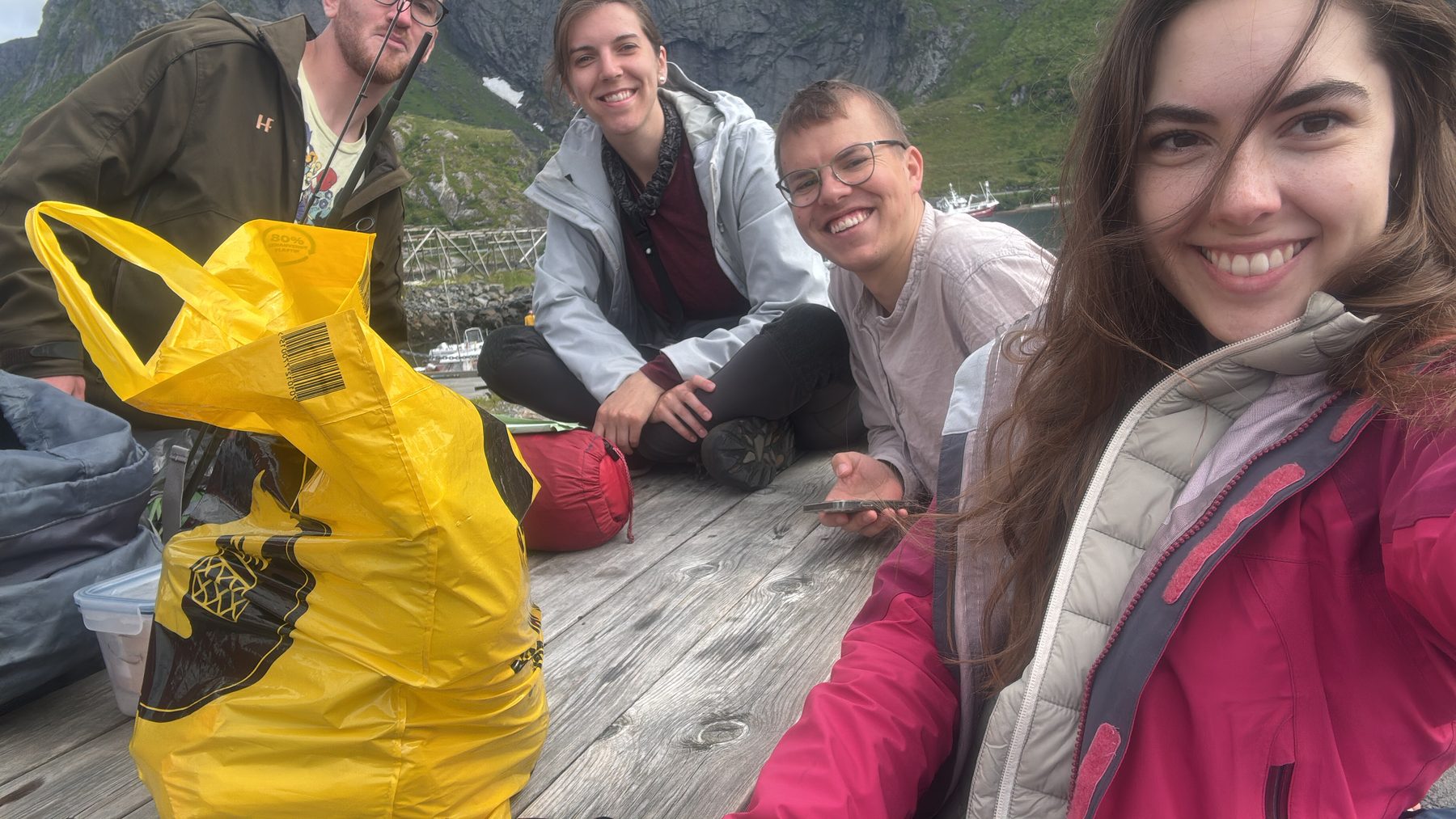
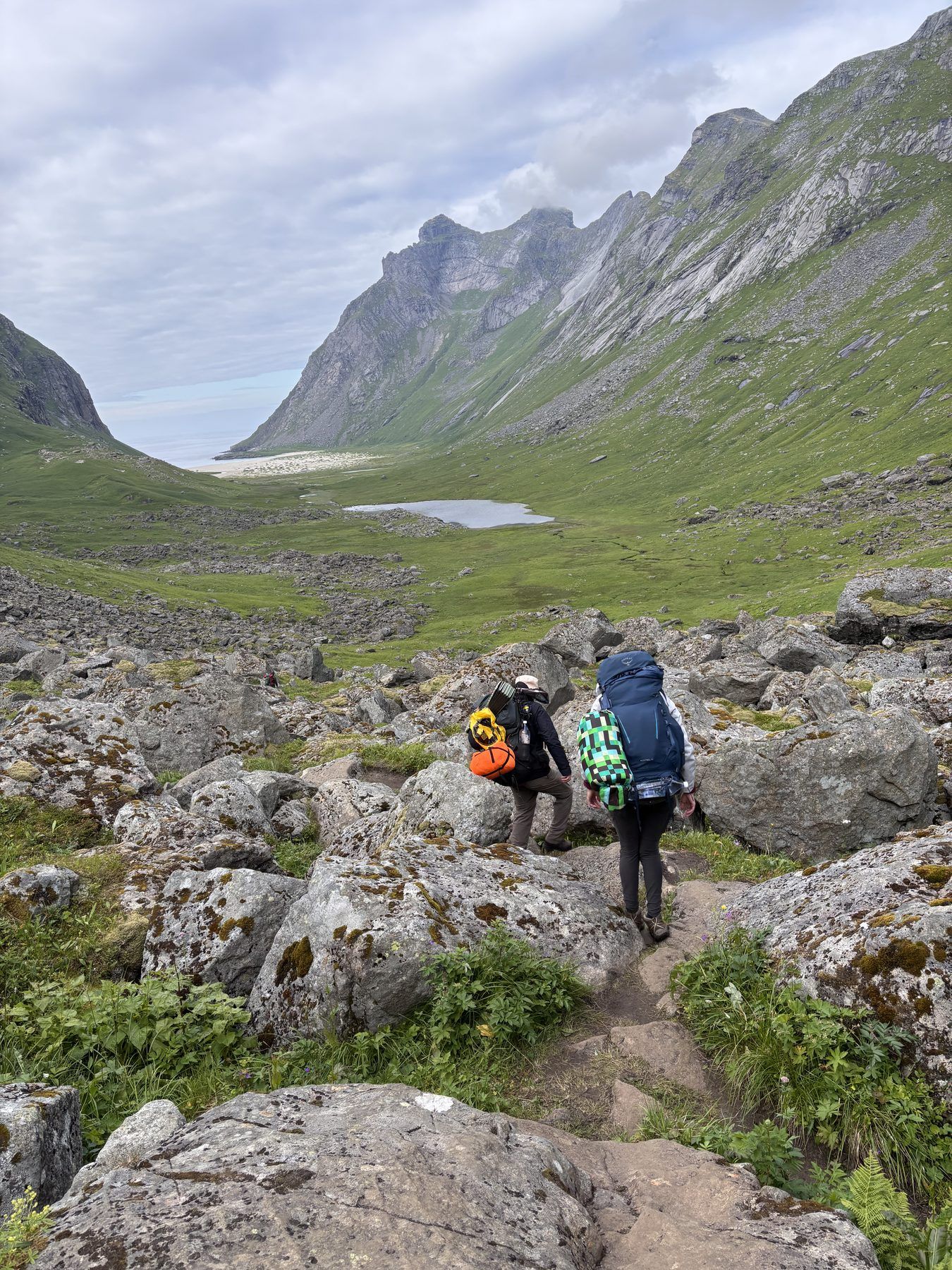
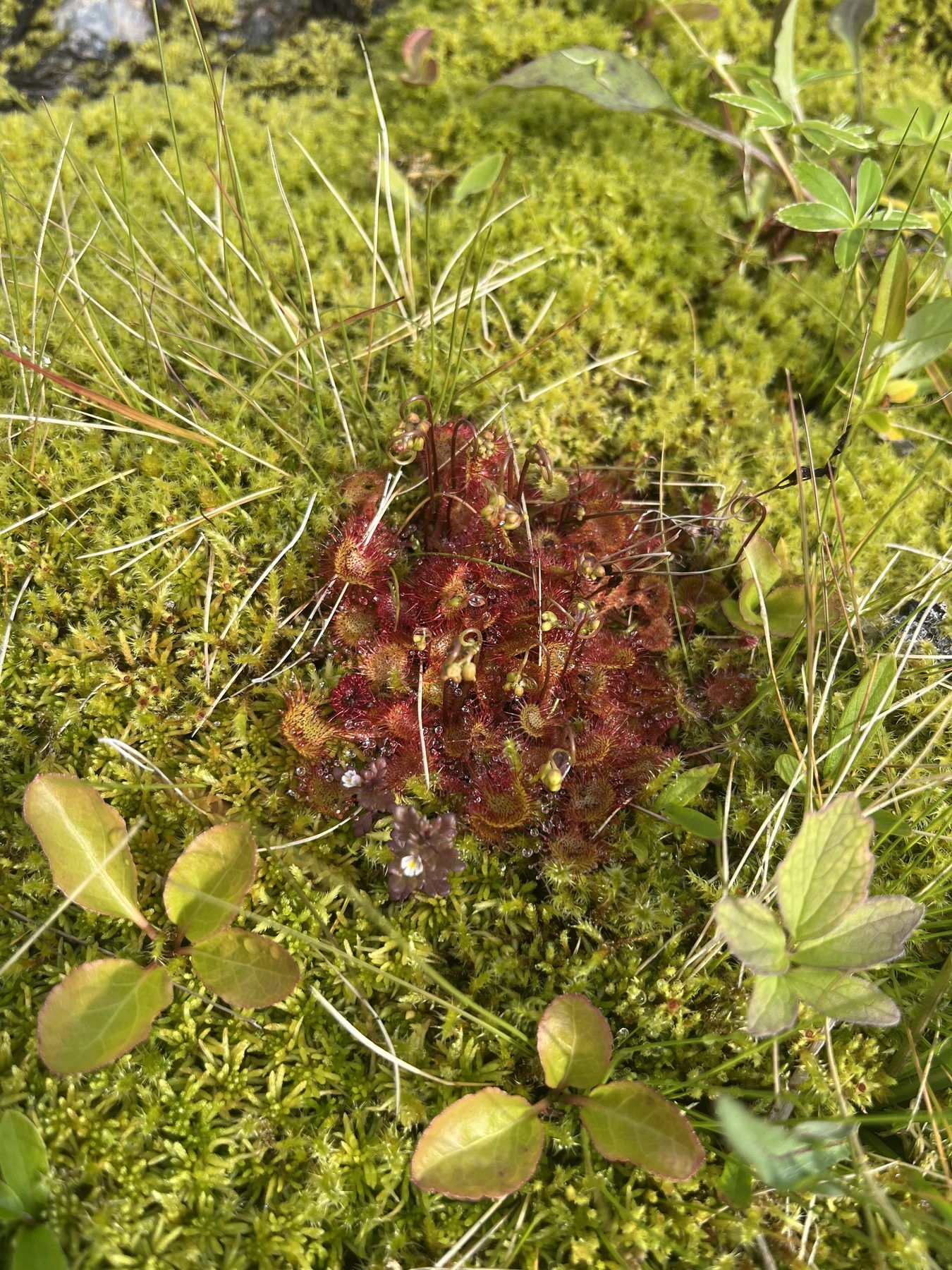
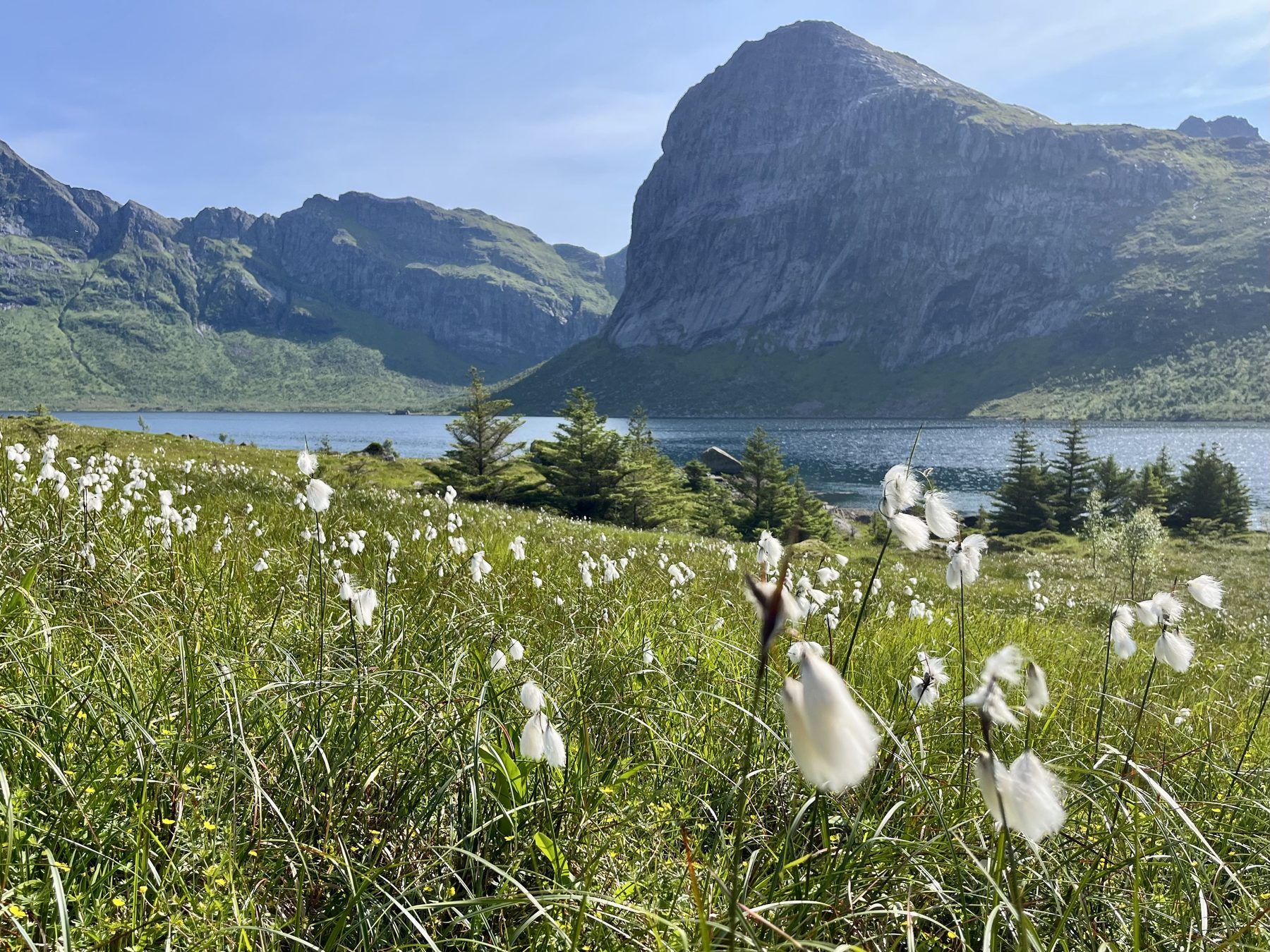
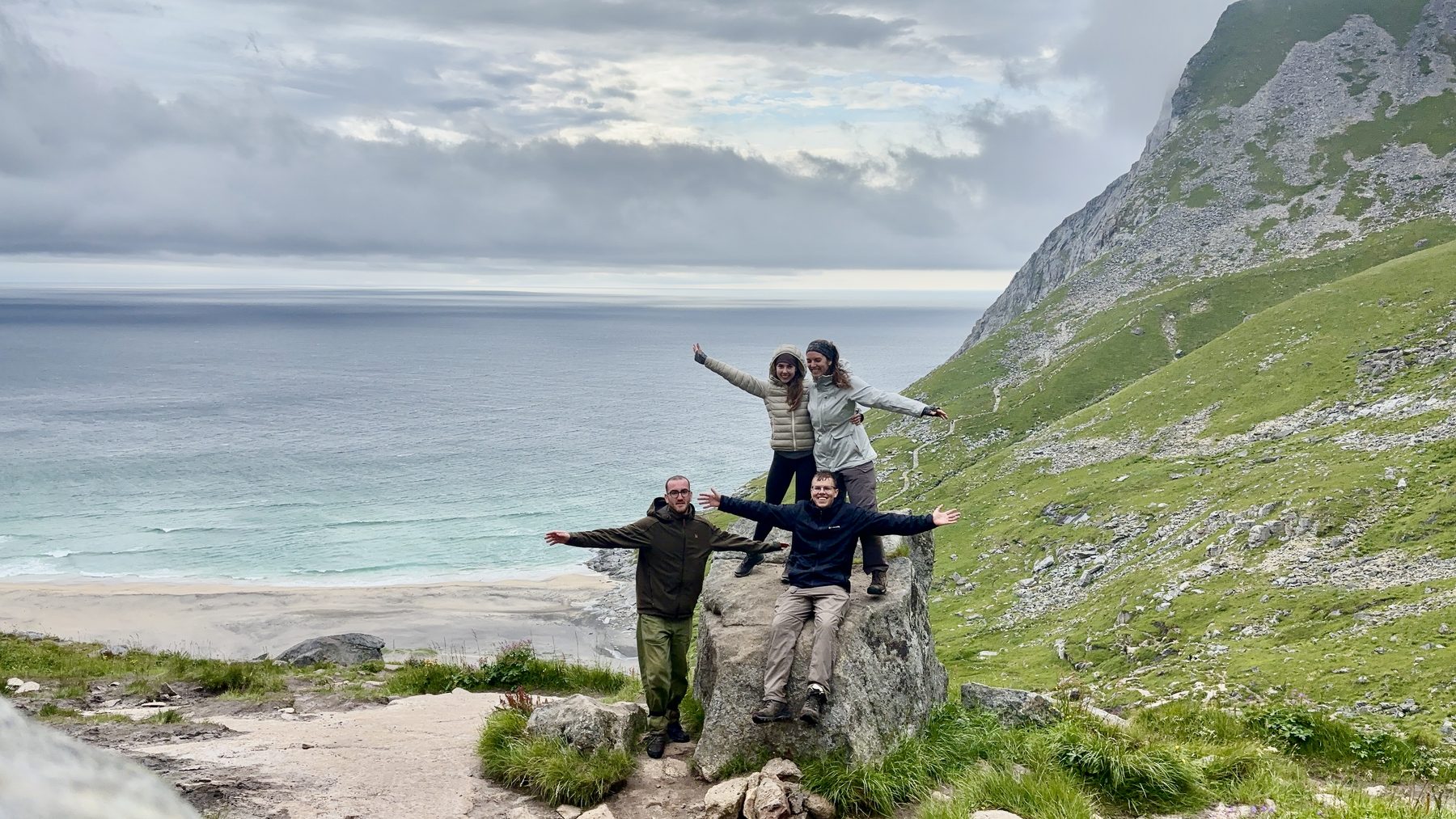
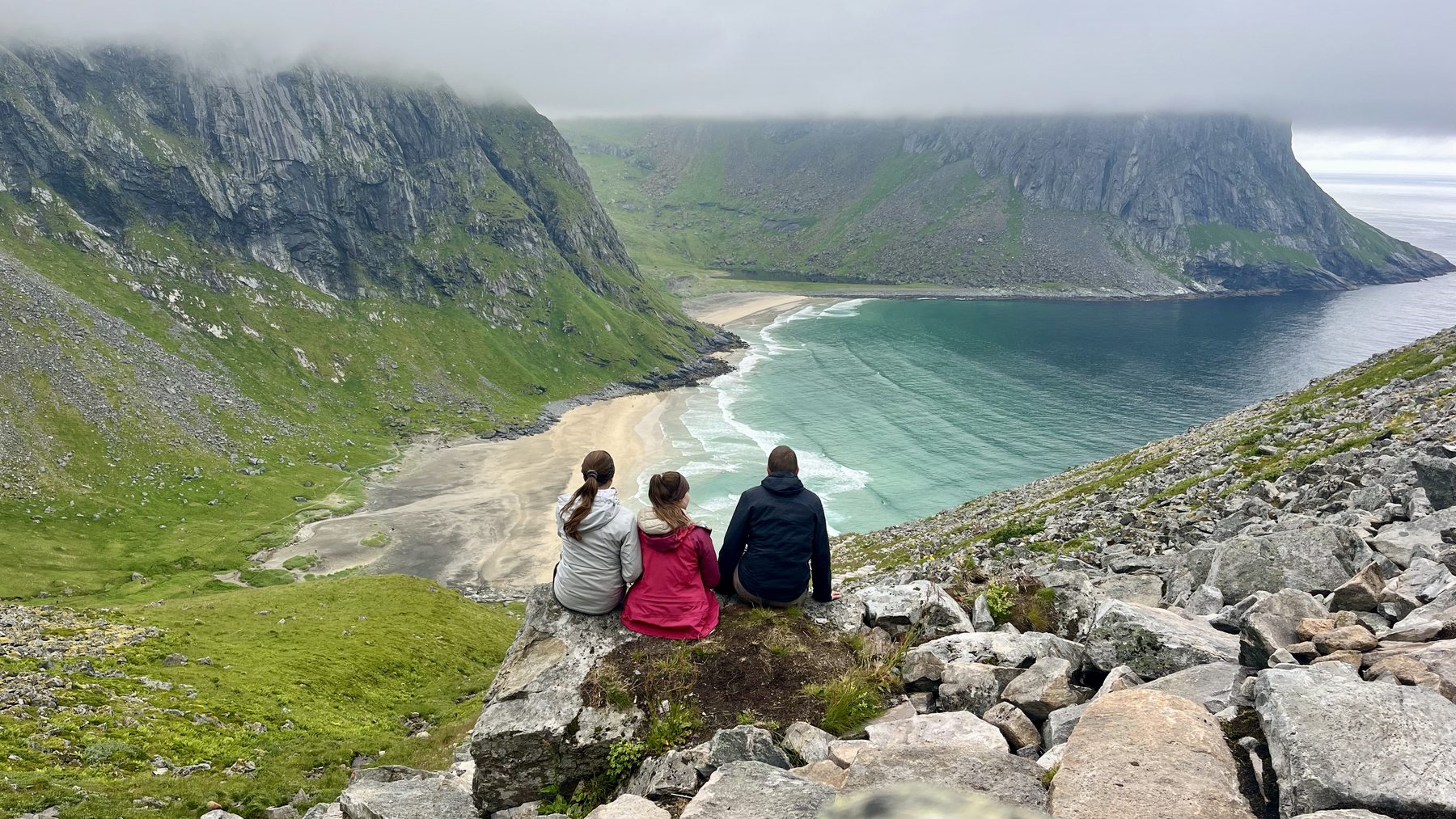
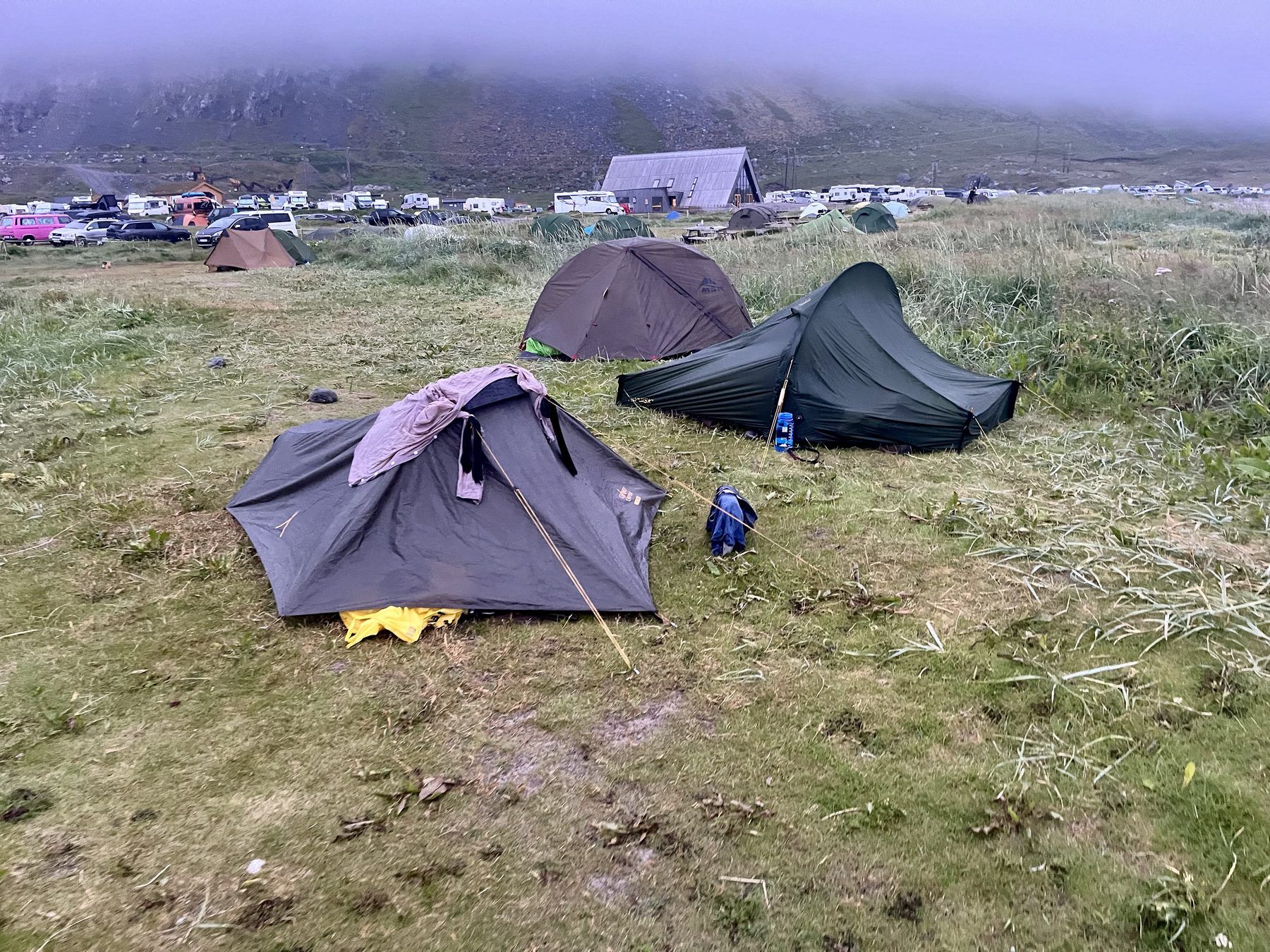
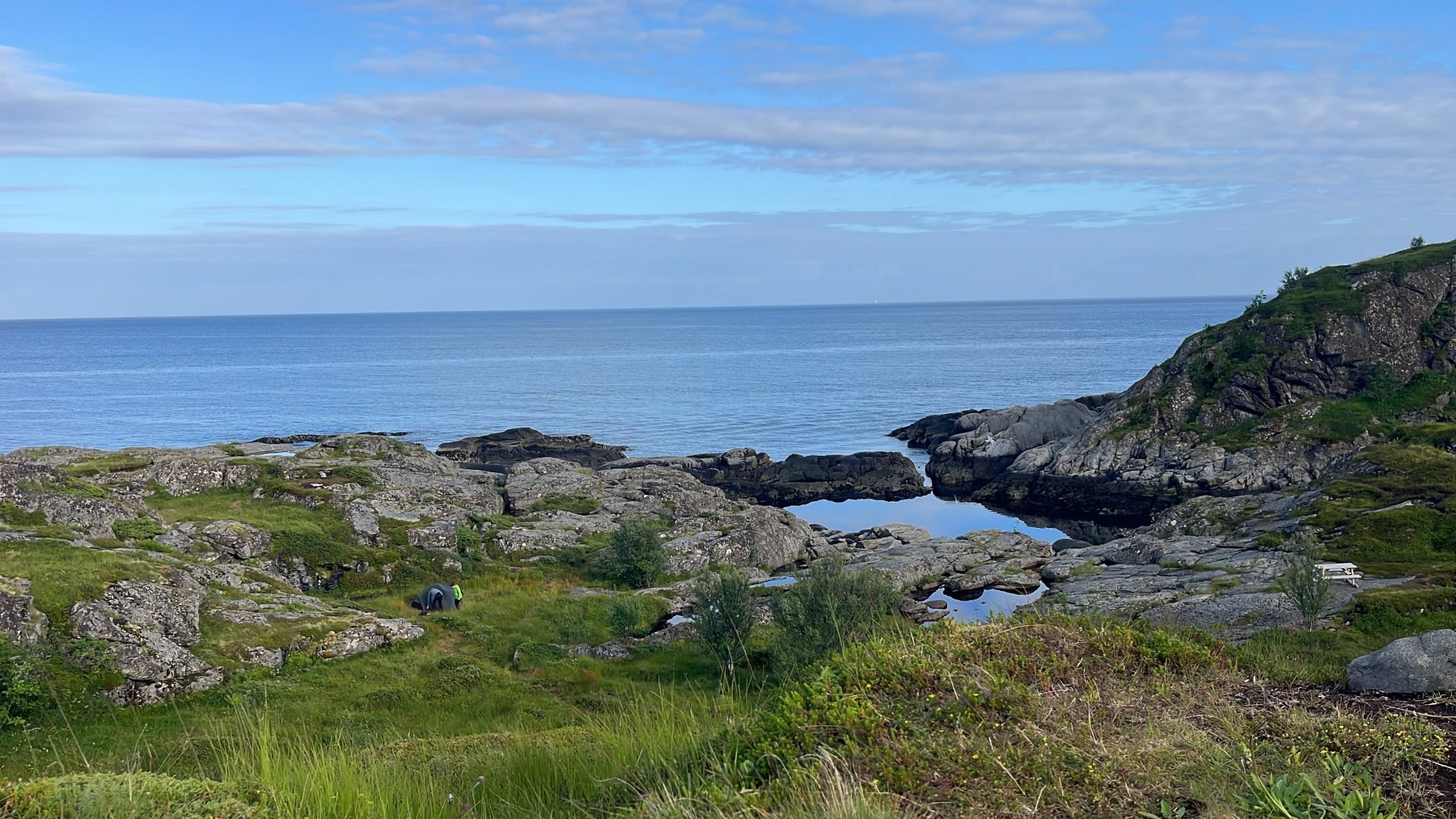
Sunday morning brought lovely weather, and we carried on in great spirits. After a short hitchhike along the water we reached the route to Kvalvika Beach, where we wanted to stay. The weather turned almost as soon as we arrived, and the rain started while we were still setting up camp, so we had to rush to get the tents up. Luckily we made it. We only saw Ryten from below that evening.
Ryten and Lofoten Camping
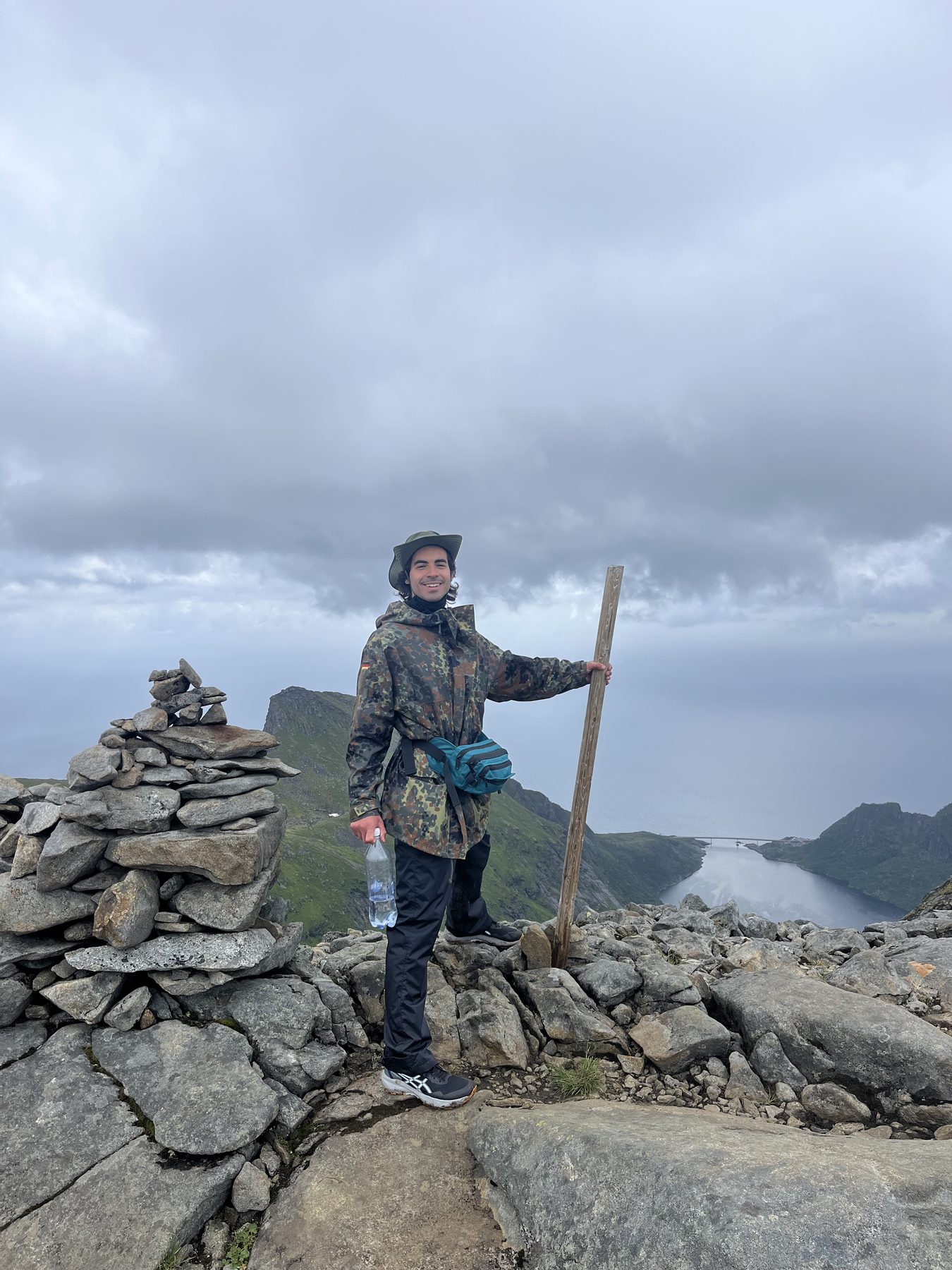
In the morning three of us climbed Ryten. It was bitterly cold and we could barely see anything from the top, but it still felt good to be up there. After coming down, we collected our gear, walked back to the road and hitchhiked to Lofoten Camping, the big, well-known campsite in the middle of the islands, a bit south of Leknes. I remember how busy it was when I hitchhiked past it two years ago.
It was windy and cold there, but not rainy, and the showers were warm, which everyone appreciated. Since the sun wasn't going down anyway, I hitched to a good fishing spot that evening. I left at nine, came back at midnight and caught a couple of fish, keeping just one.
Svolvær: a bridge, a cod and a salmon tip
The next day we took the bus to Svolvær. One friend had already left that morning, so we were down to three. We spent some time in a café first. My friends wanted to write postcards, so I went down to the water and fished for a while, without luck.
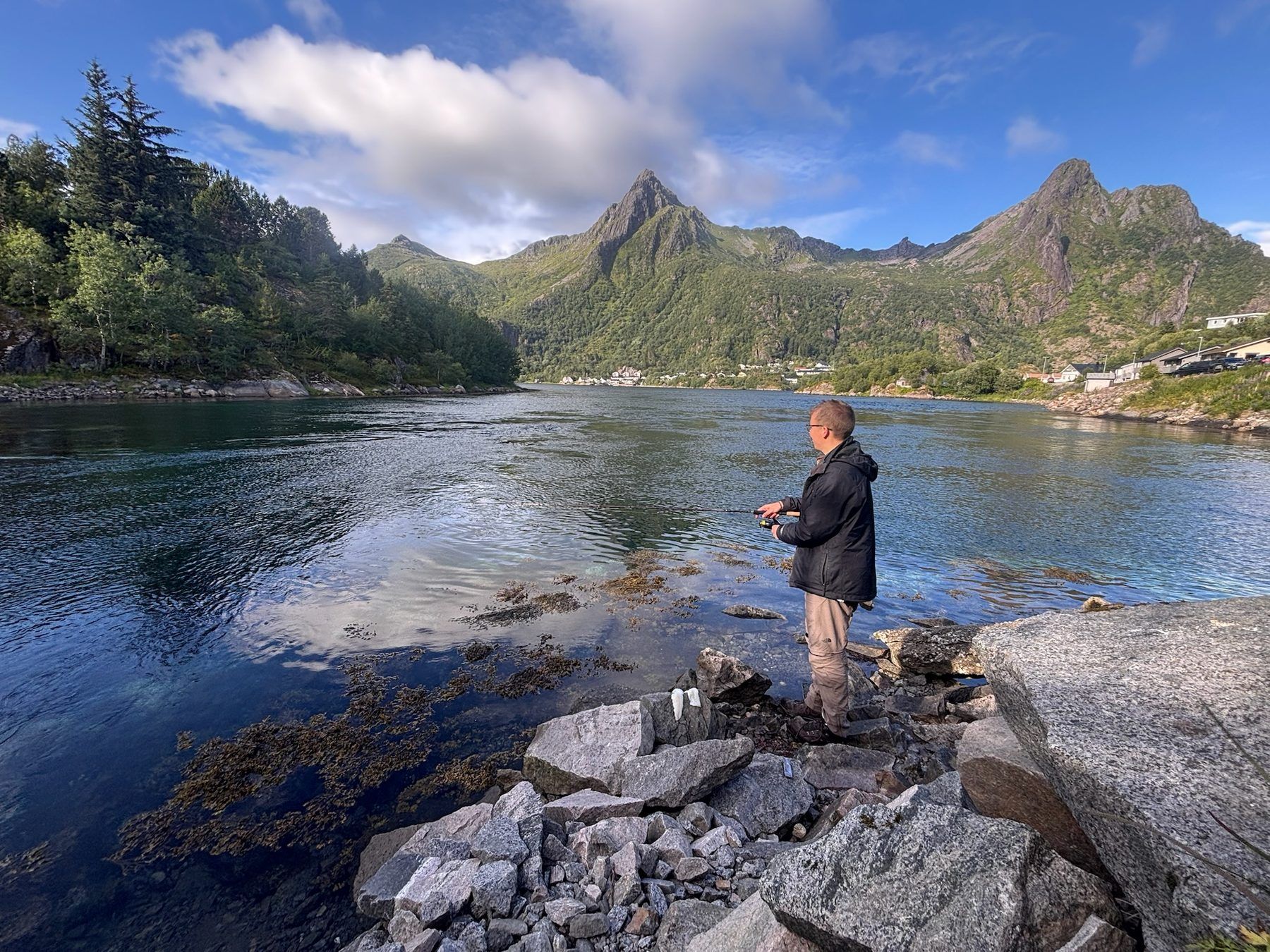
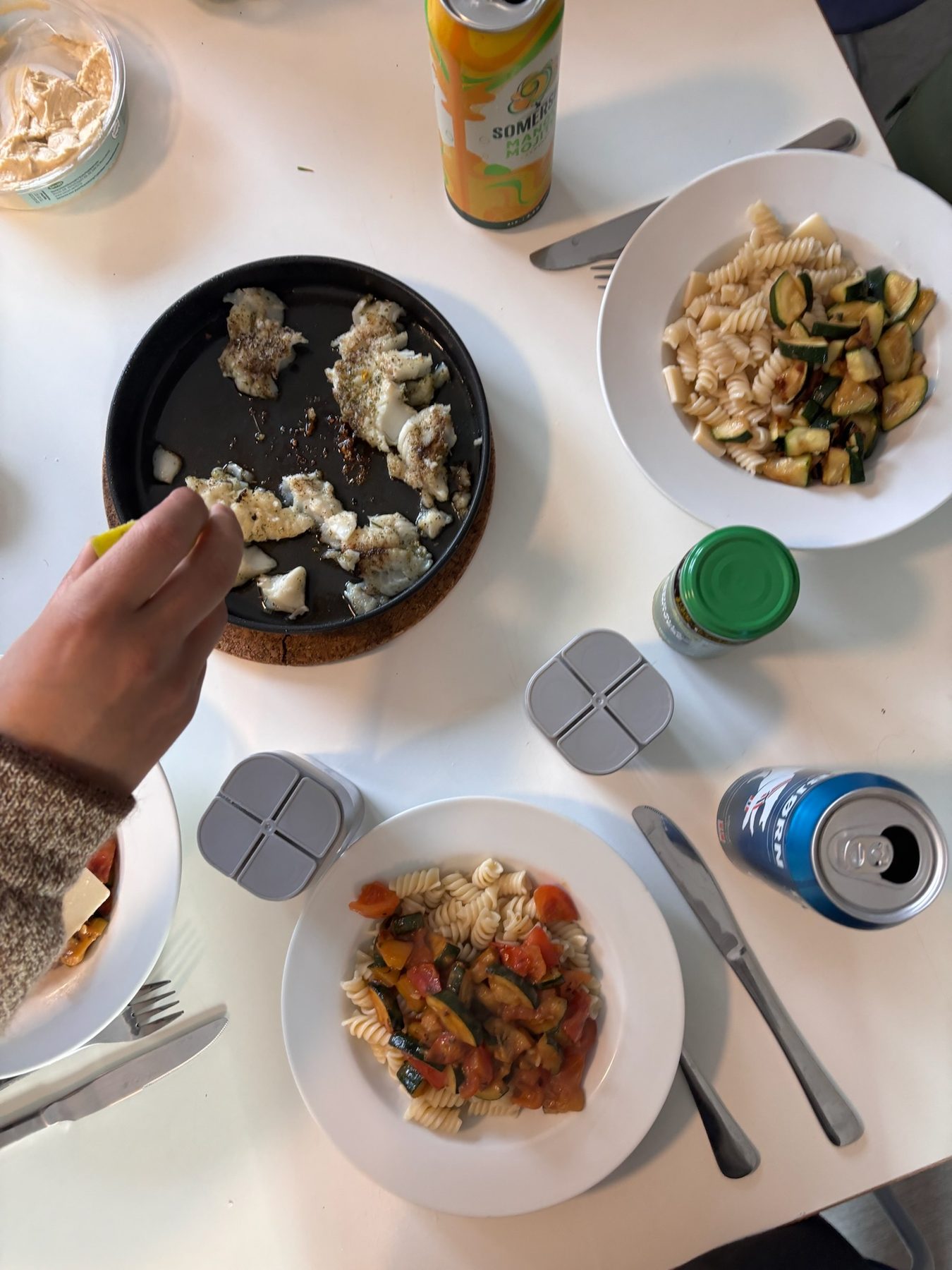
When I got back, a friend asked whether we could stop at a bridge on the way to the campsite, where there was a geocache. She also mentioned it was supposed to be a good fishing spot, so I agreed immediately. The bridge sat over a tiny fjord (I'm not sure it even counts as one) where the tide pushes the water in and out. While she searched for the cache, I set up my rod and caught a cod before she found it. The fish we saw jumping were salmon, and locals who arrived a few minutes later pulled out a mackerel straight away. They told us the salmon had arrived only three days earlier. I decided on the spot that I wanted one too. We ate the cod that evening.
Devil's Gate and the ridge above Svolvær
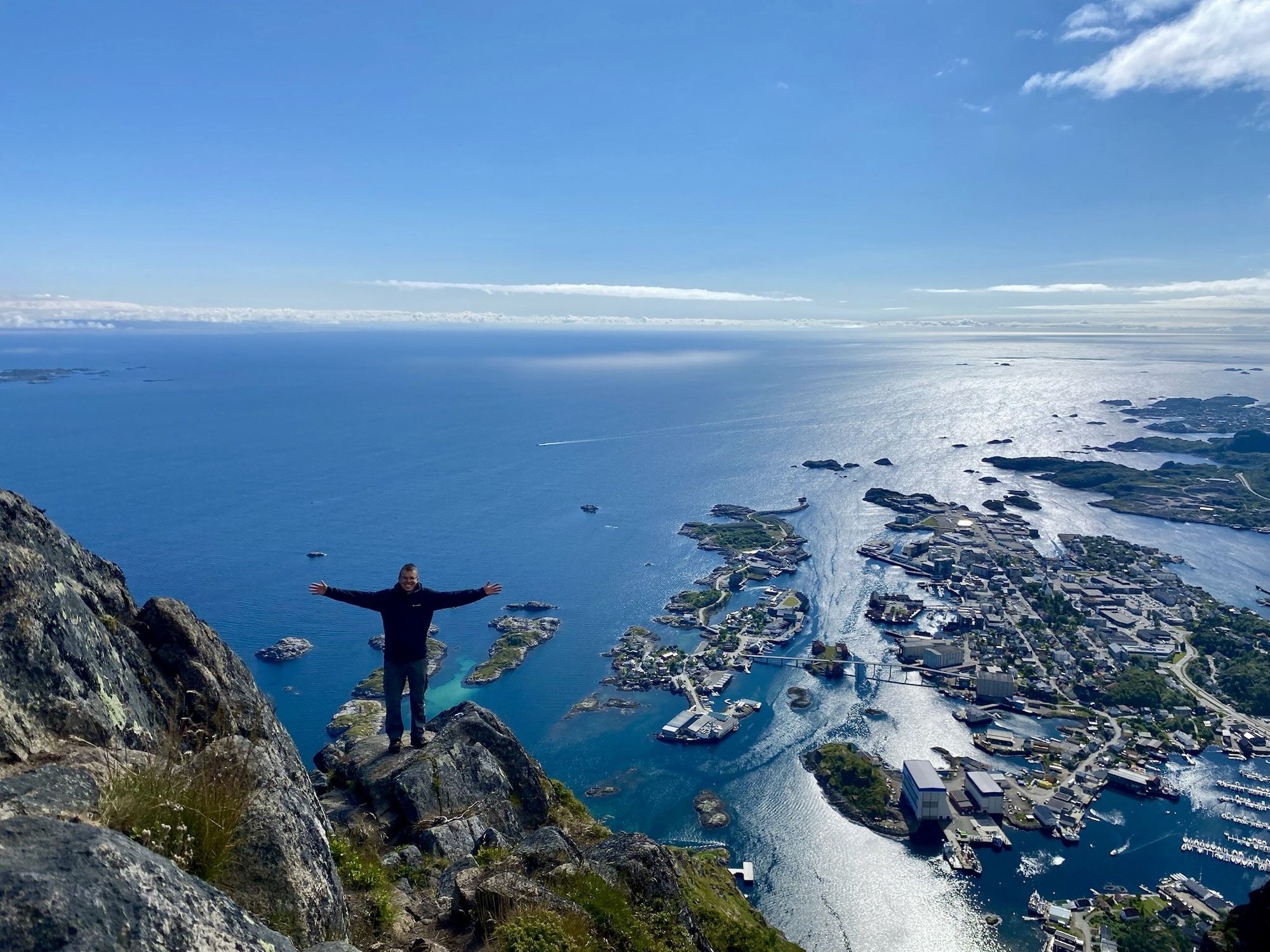
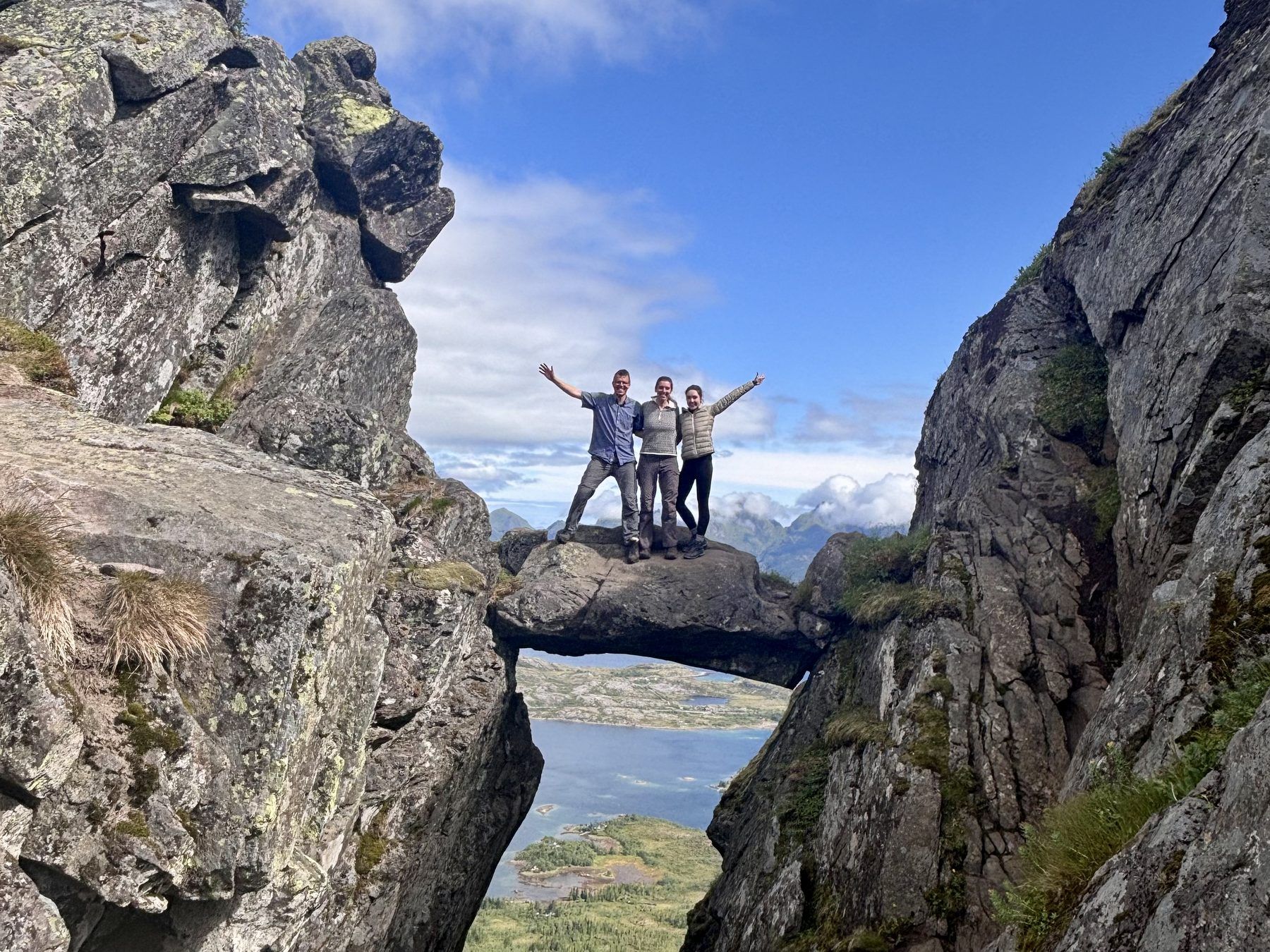
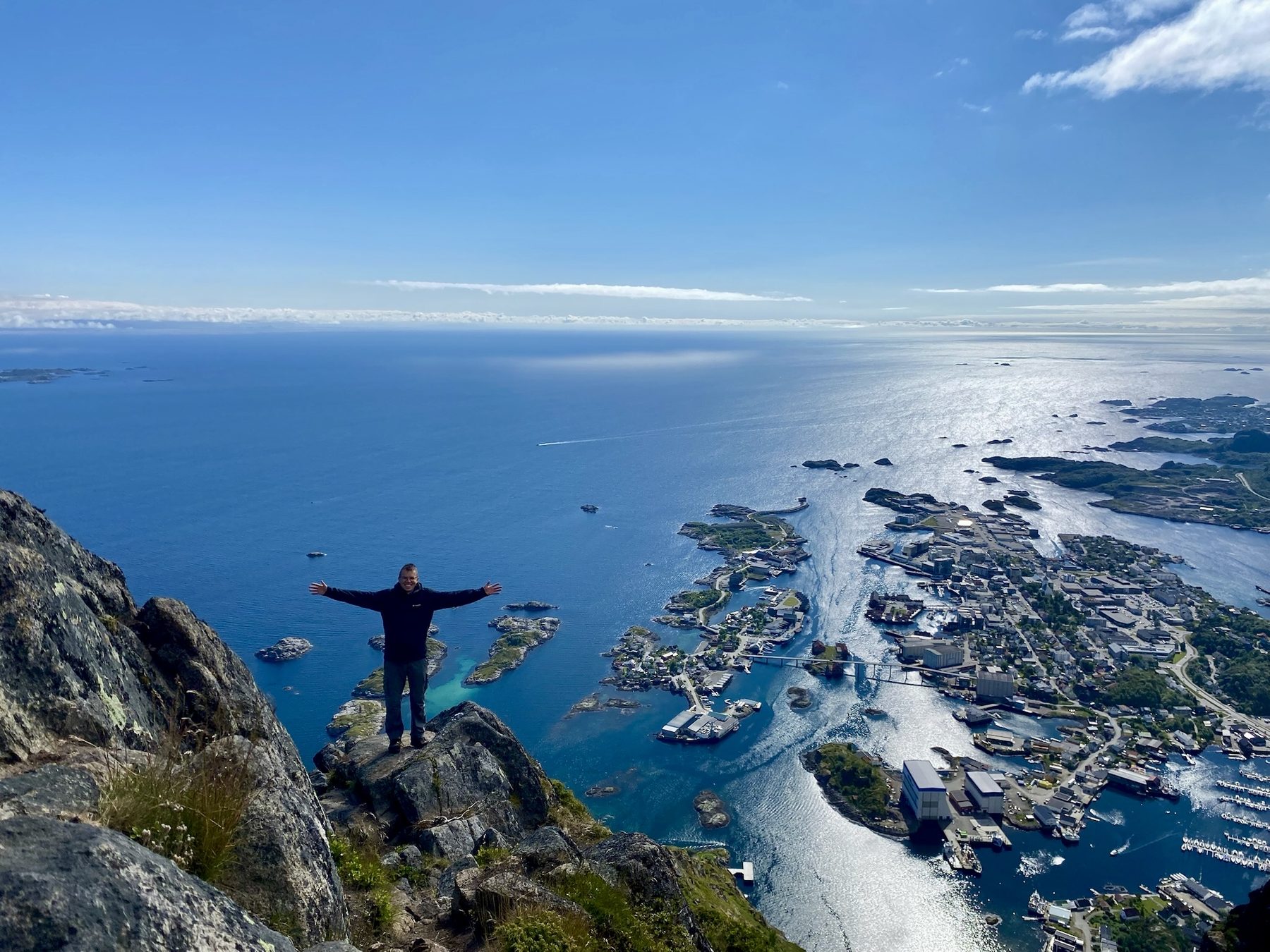
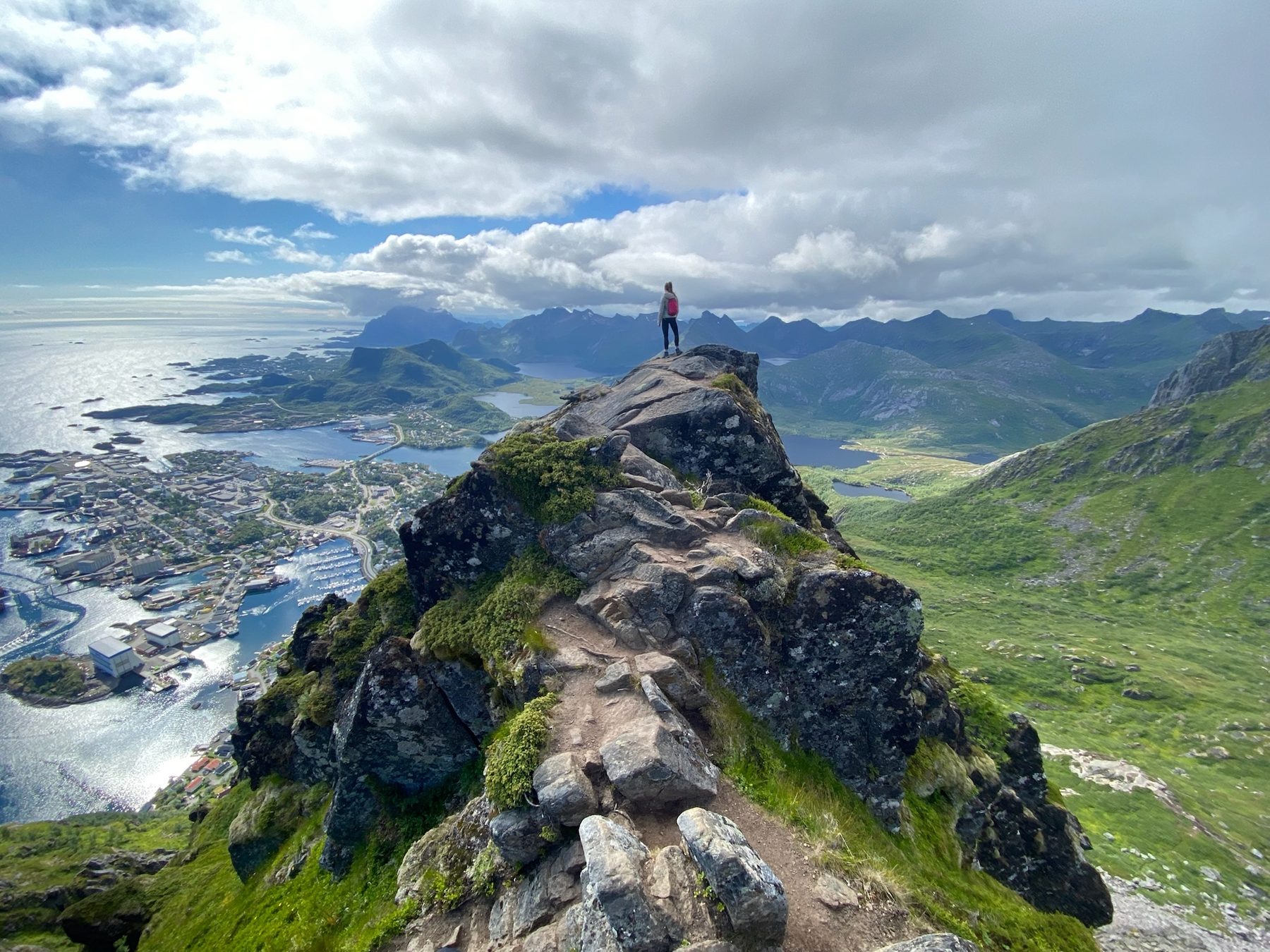
The next morning I went into town to buy a lure suited to salmon. Then we hiked to the Devil's Gate and on along the ridge above the town, all the way to the front end overlooking Svolvær. We had left our luggage at the campsite and the weather was excellent, a perfect combination of views and conditions, and one of the best hikes of the trip.
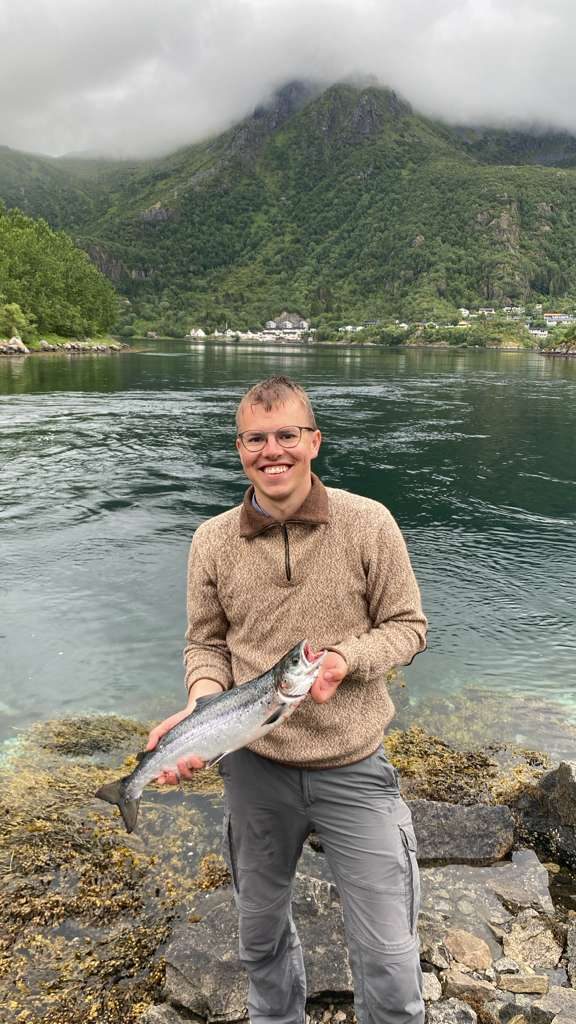
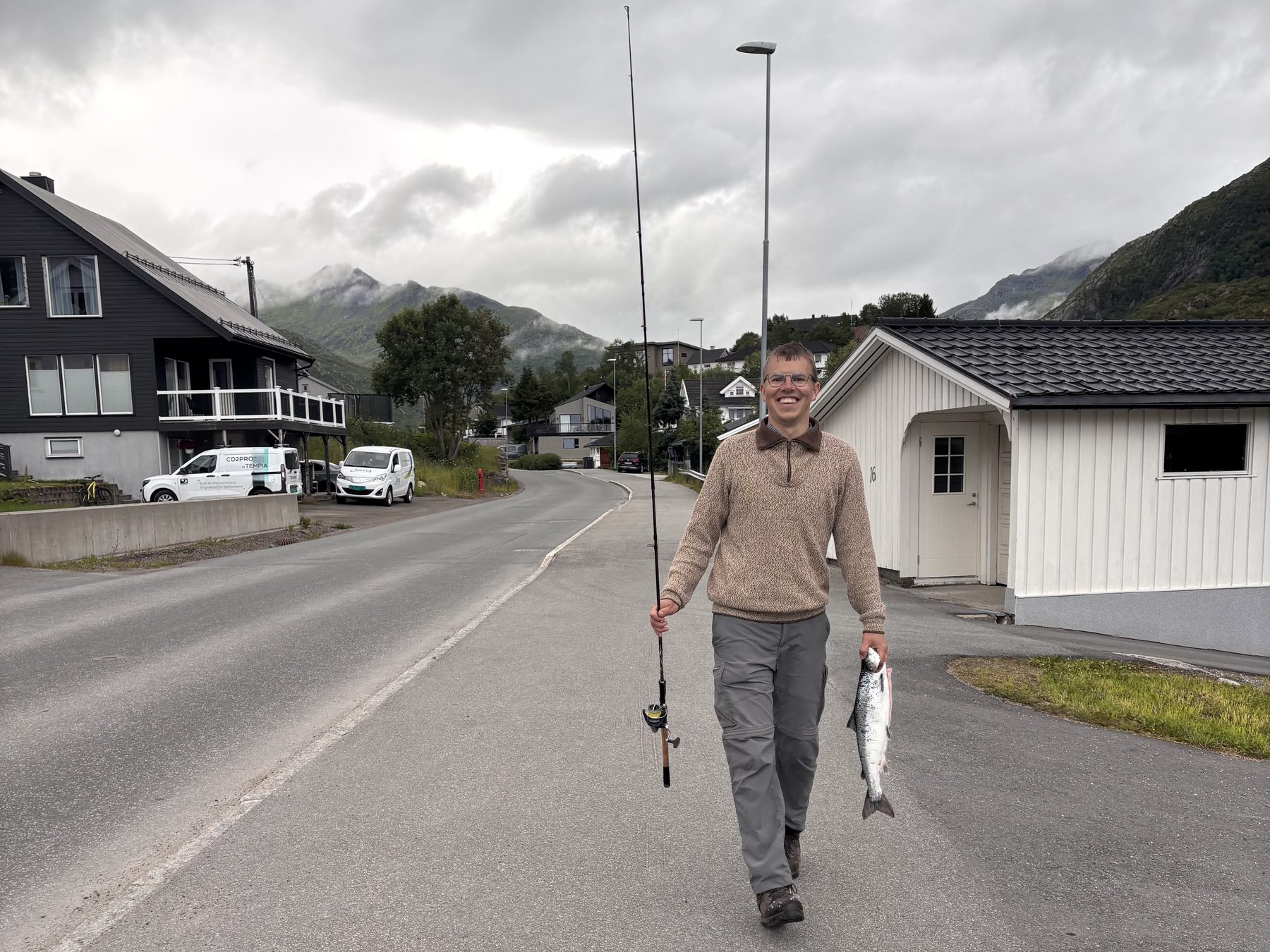
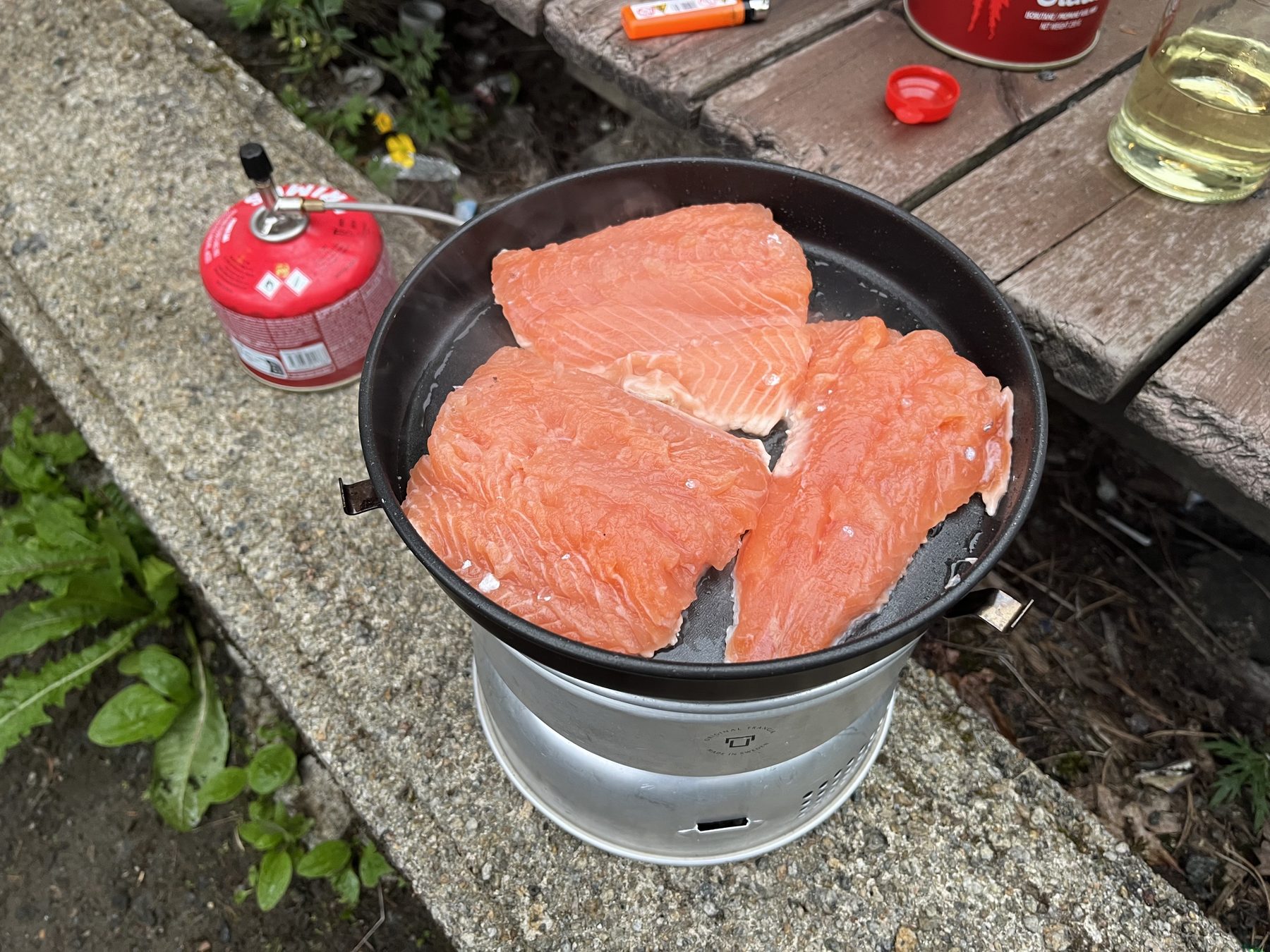
We got back in the early afternoon, which happened to be the peak of the tide, so we went straight back to the water. After half an hour I landed my salmon. It was a good size, not huge but enough to feed three people generously. We had a big salmon steak each that evening, and again the evening after.
Henningsvær
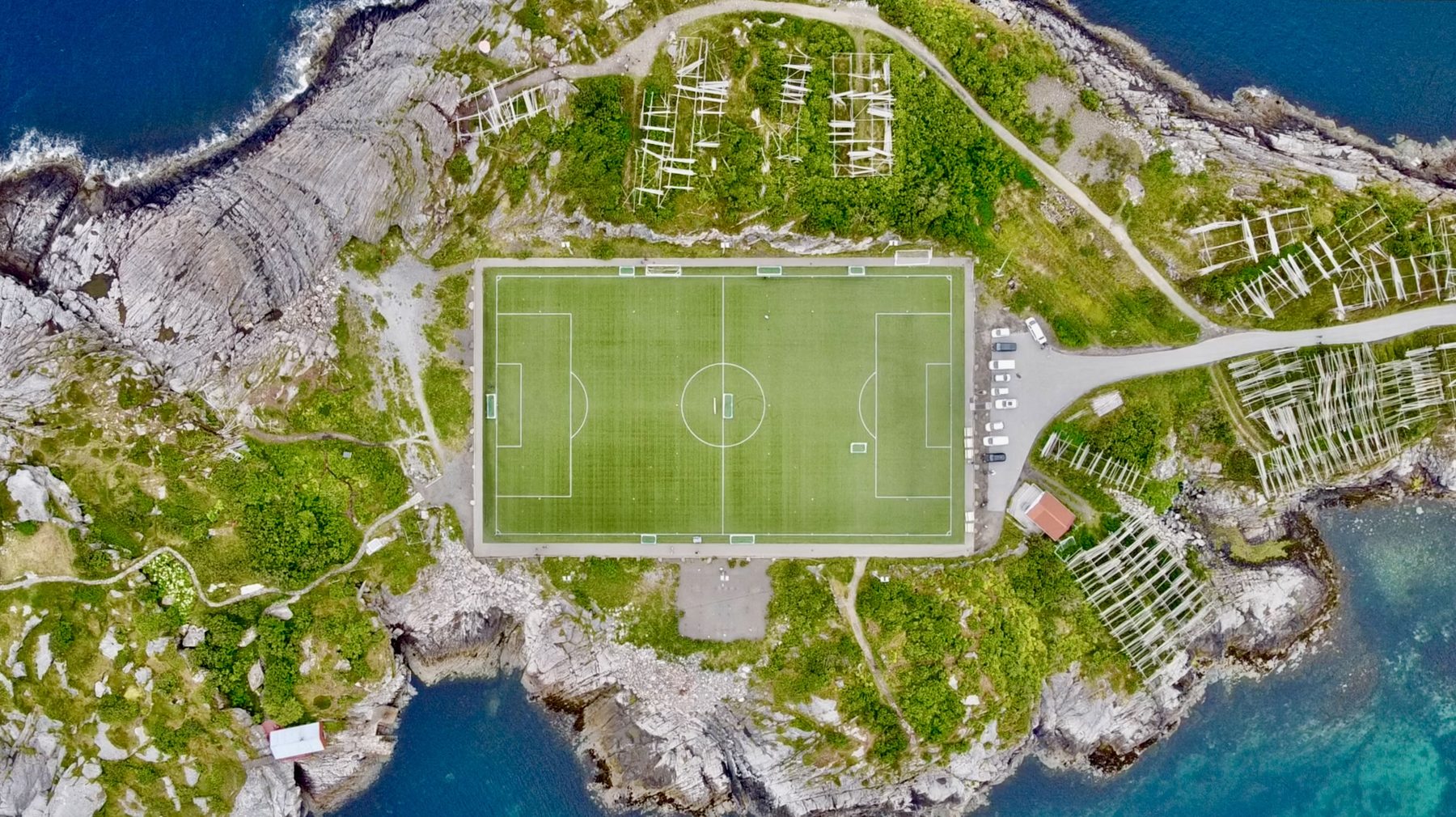
The next day we visited Henningsvær and its famous football pitch. I flew the drone over it, and we strolled through town and stopped at a nice café. The weather was poor, so it was a slow day. In the afternoon I couldn't resist trying for salmon again. I had one bite, but nothing more.
Heading south again
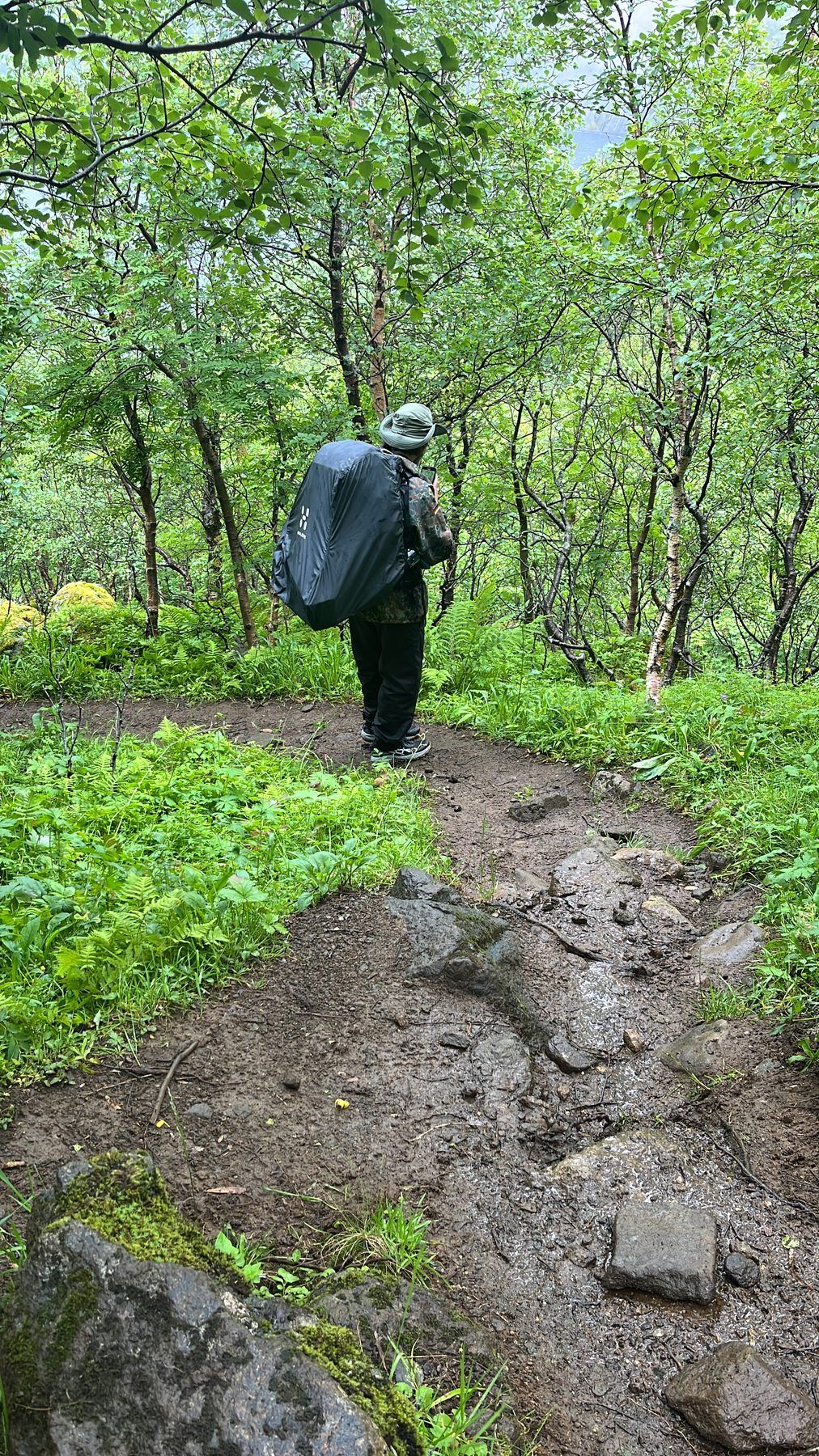
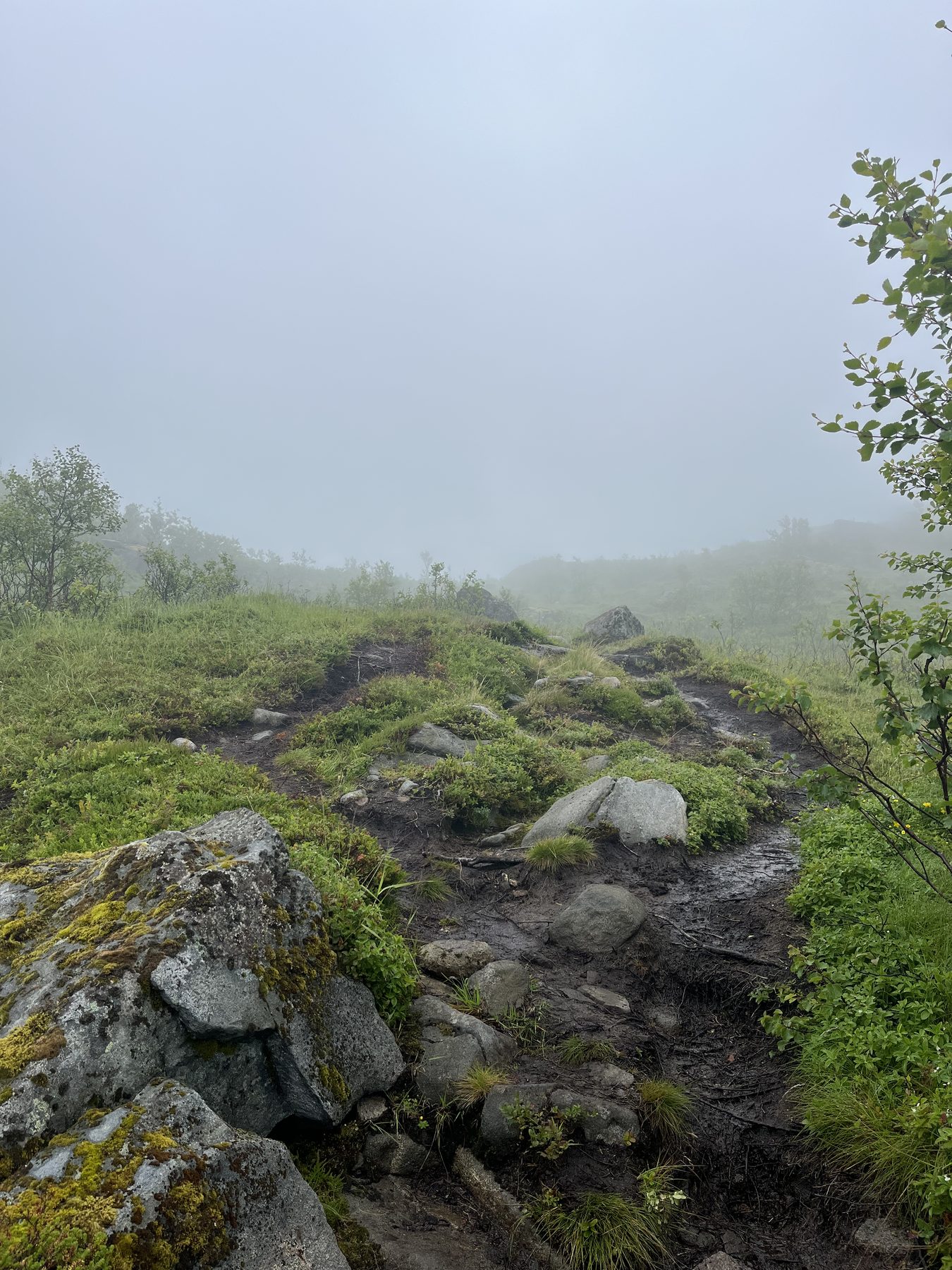
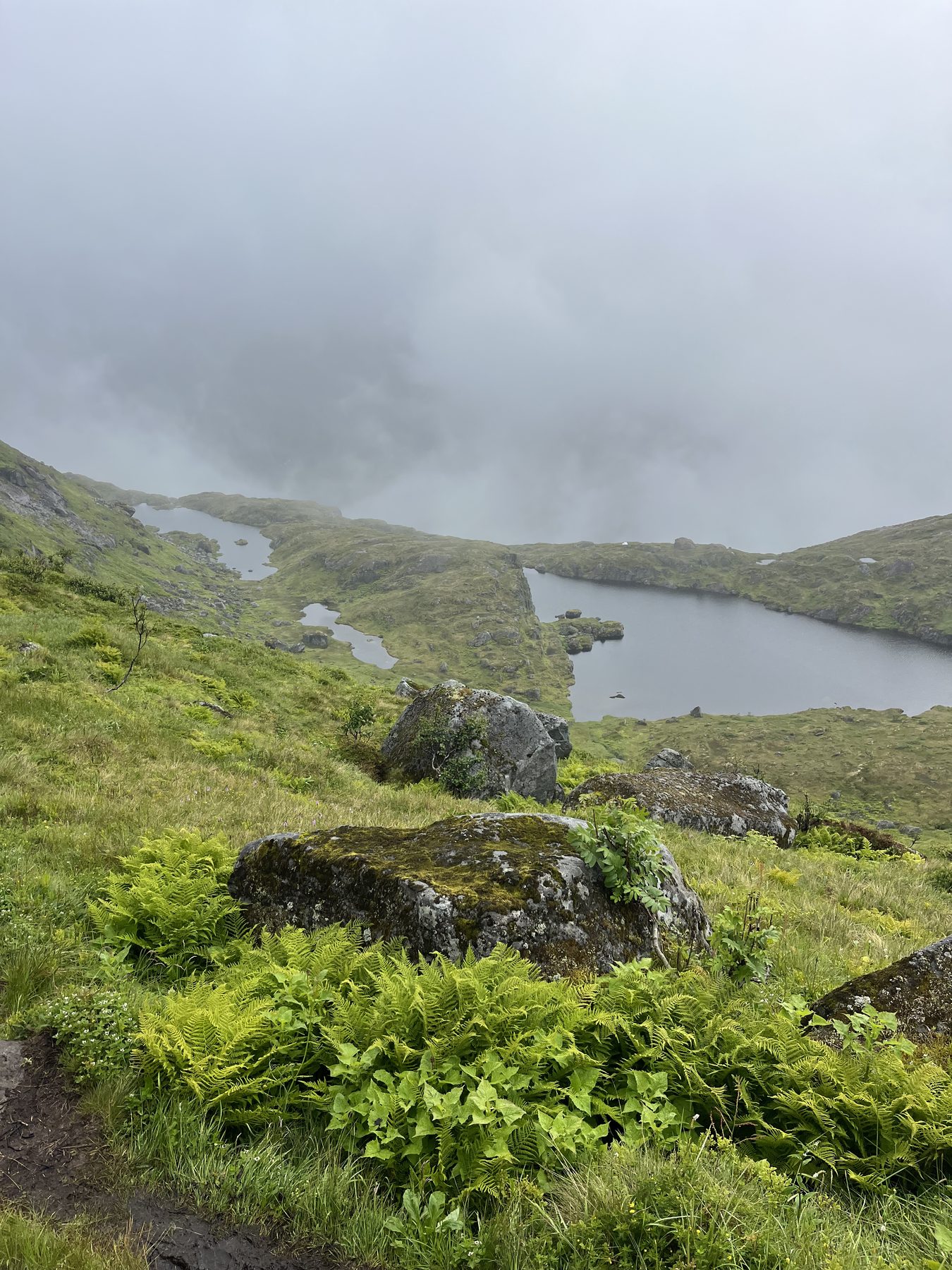
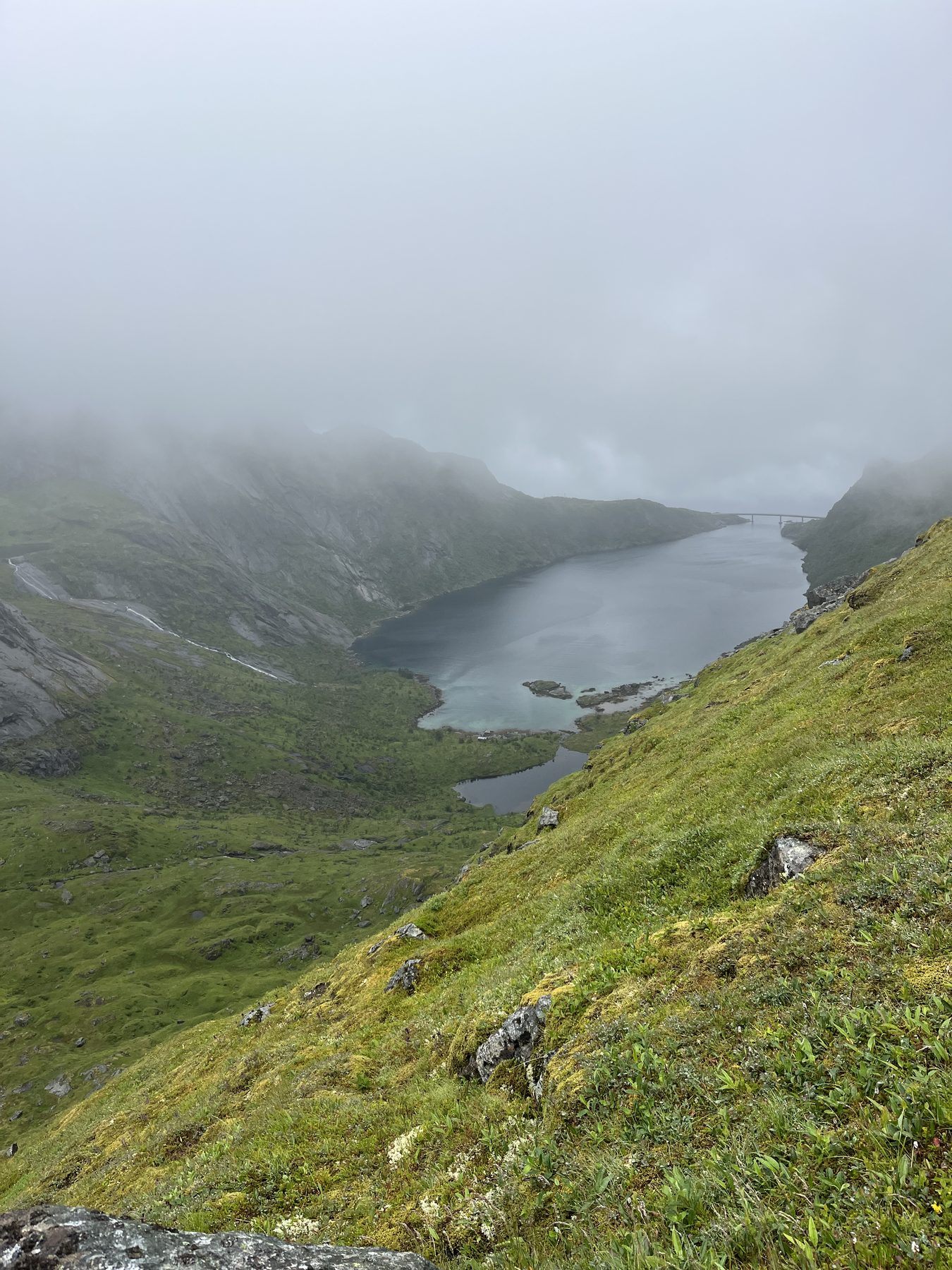
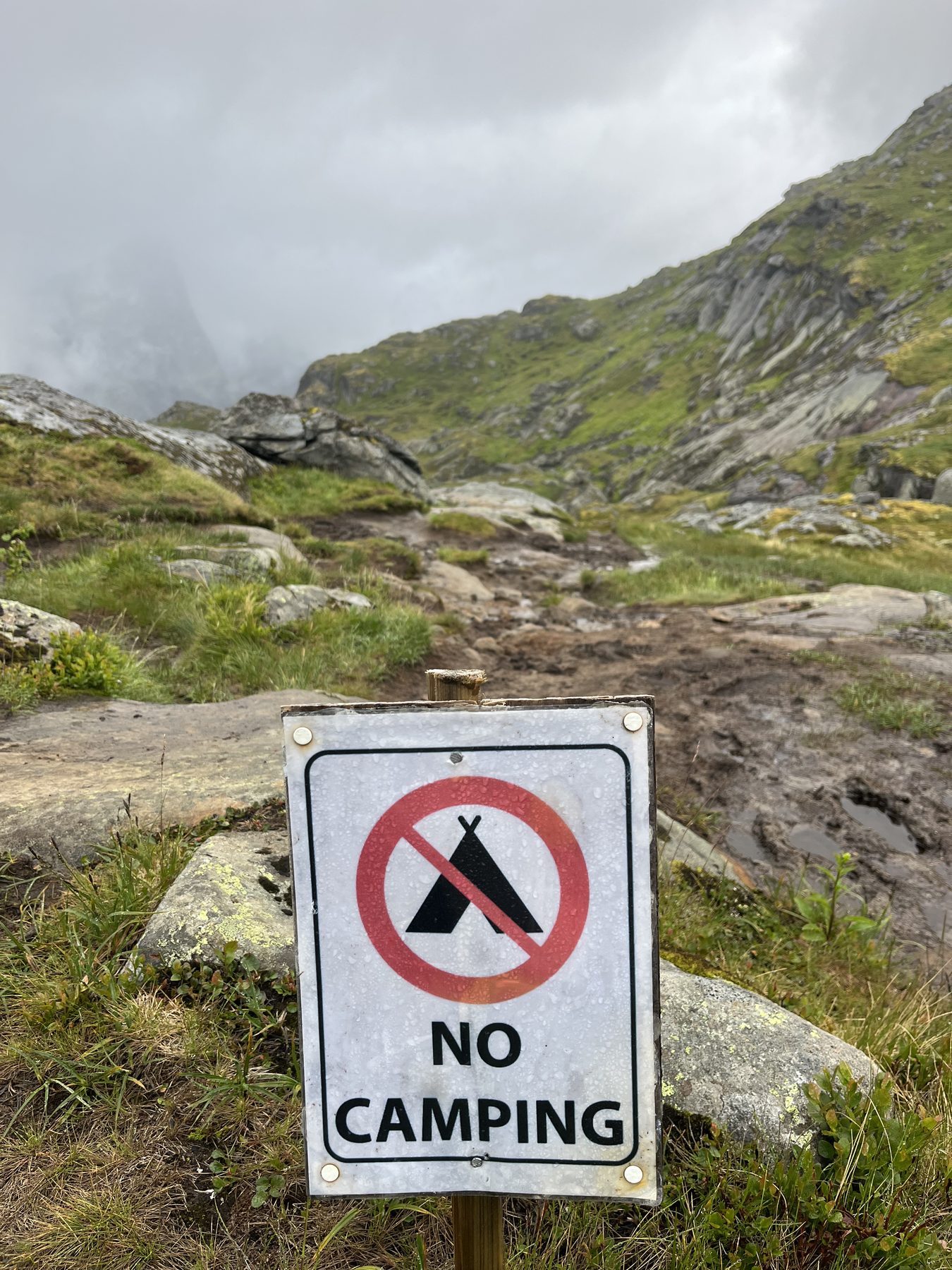
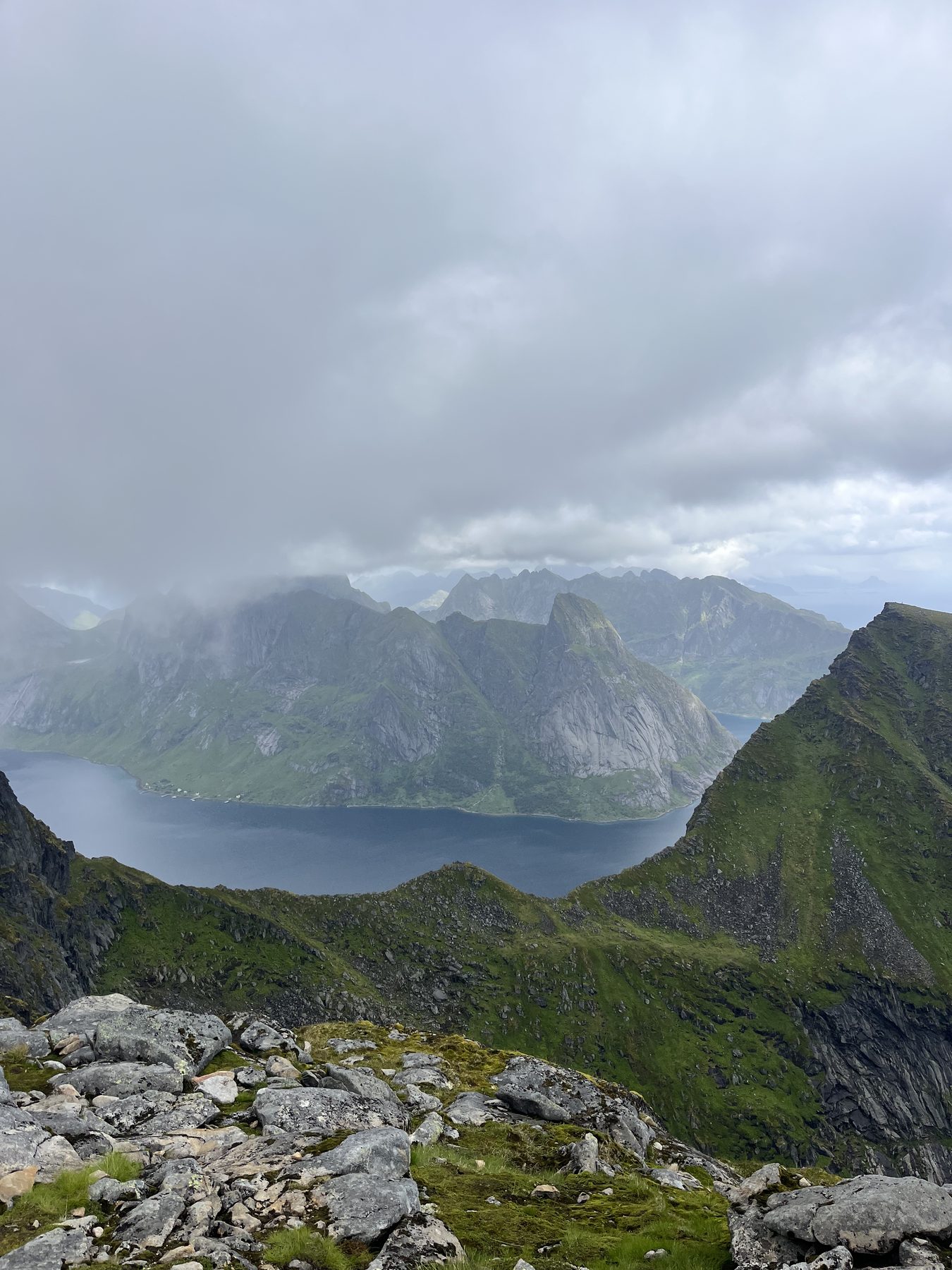
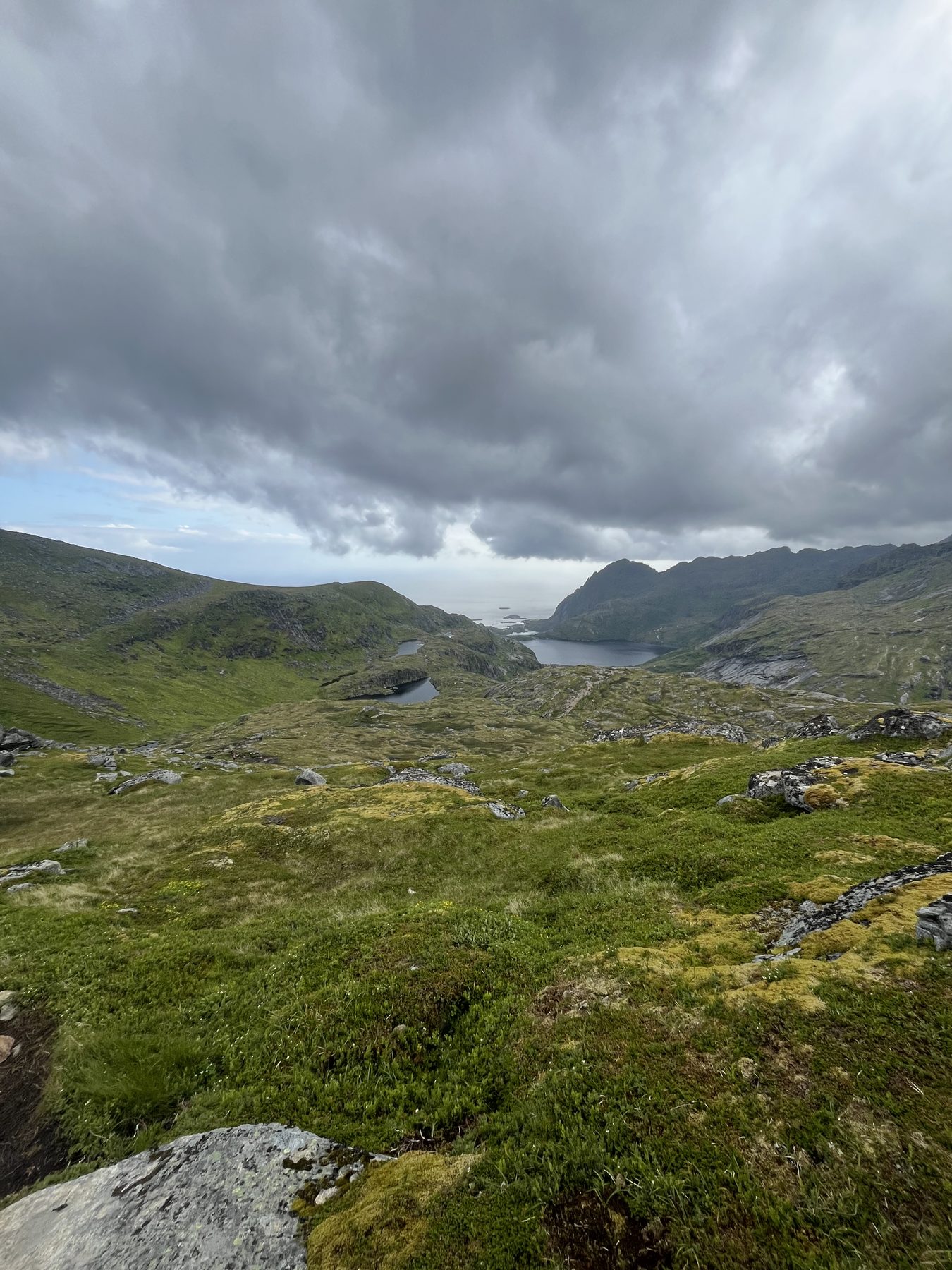
The following day we headed back south. My German friend left us that day, but we stayed on the bus, and my flatmate joined at the very next stop, so we were three again. It got late once more, but we still hiked to the Munkebu Hut, one of the toughest days of the trip. It was extremely wet, and the paths were muddy and slippery. The rain eased slightly, but we had almost no visibility, sometimes only about 50 metres. For a split second the clouds opened to one side and showed us the neighbouring valley, and then it was gone again. By the time we arrived, the good camping spots were taken, but we found a place that was dry enough and went to bed exhausted.
Along the way we had met some people who told us about the helicopter from Værøy, and that's when we decided to take it.
Back at Moskenes: a mackerel evening
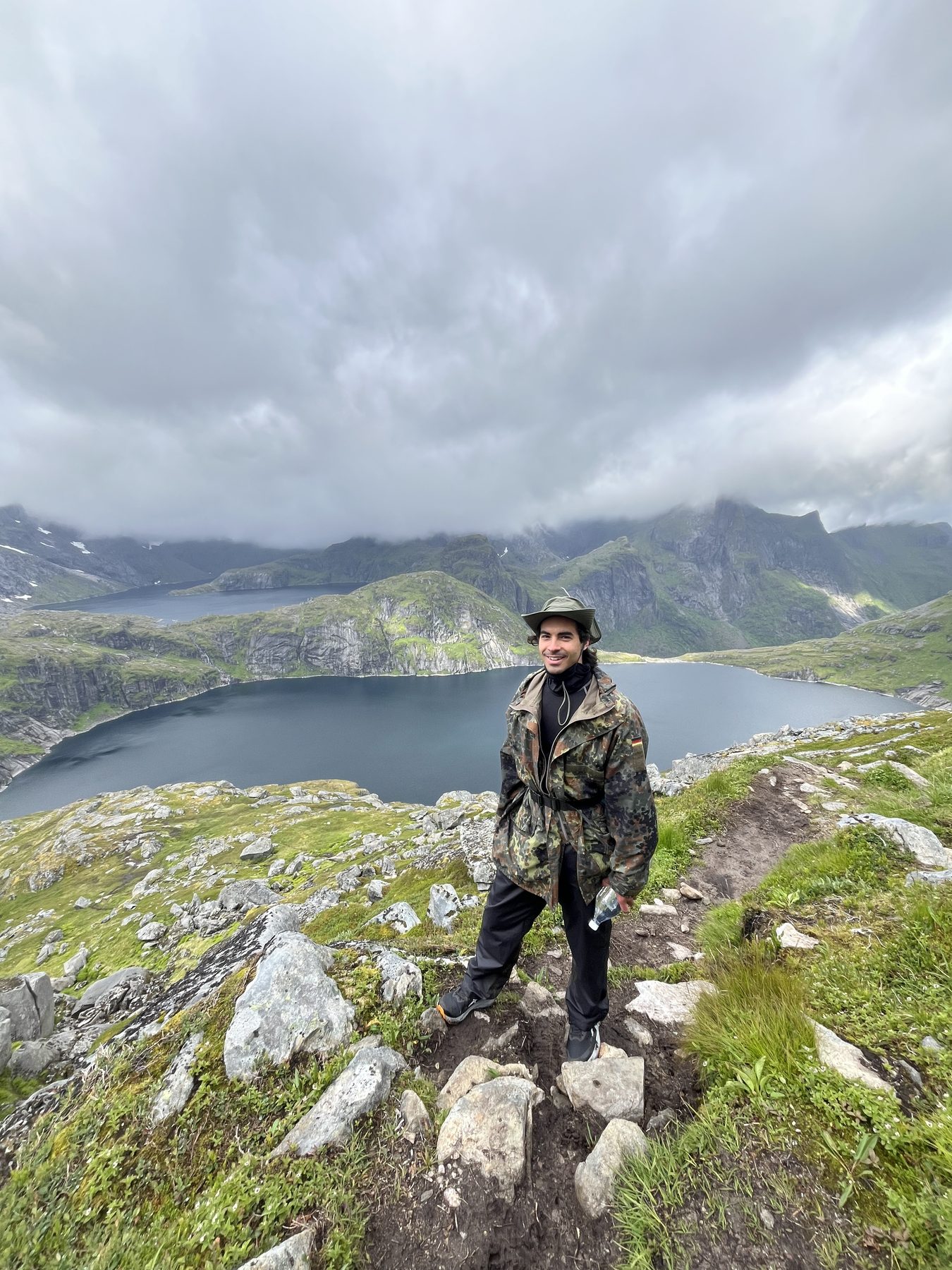
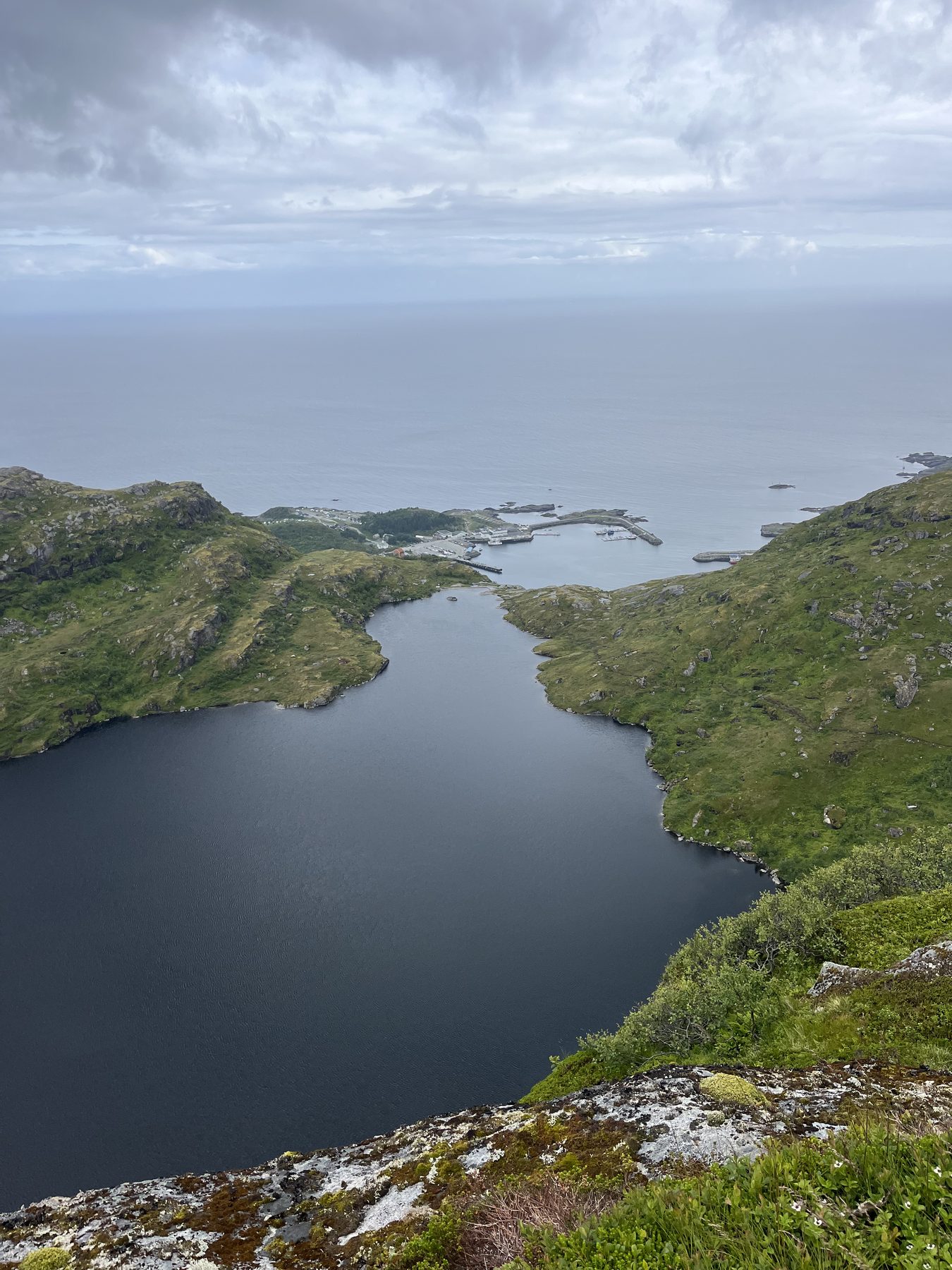
The next day my flatmate and I climbed to the top of Munkebu, and this time we got a nice view. We headed back to the Moskenes campsite, which felt like a new route, because now we got all the views we had missed the day before.
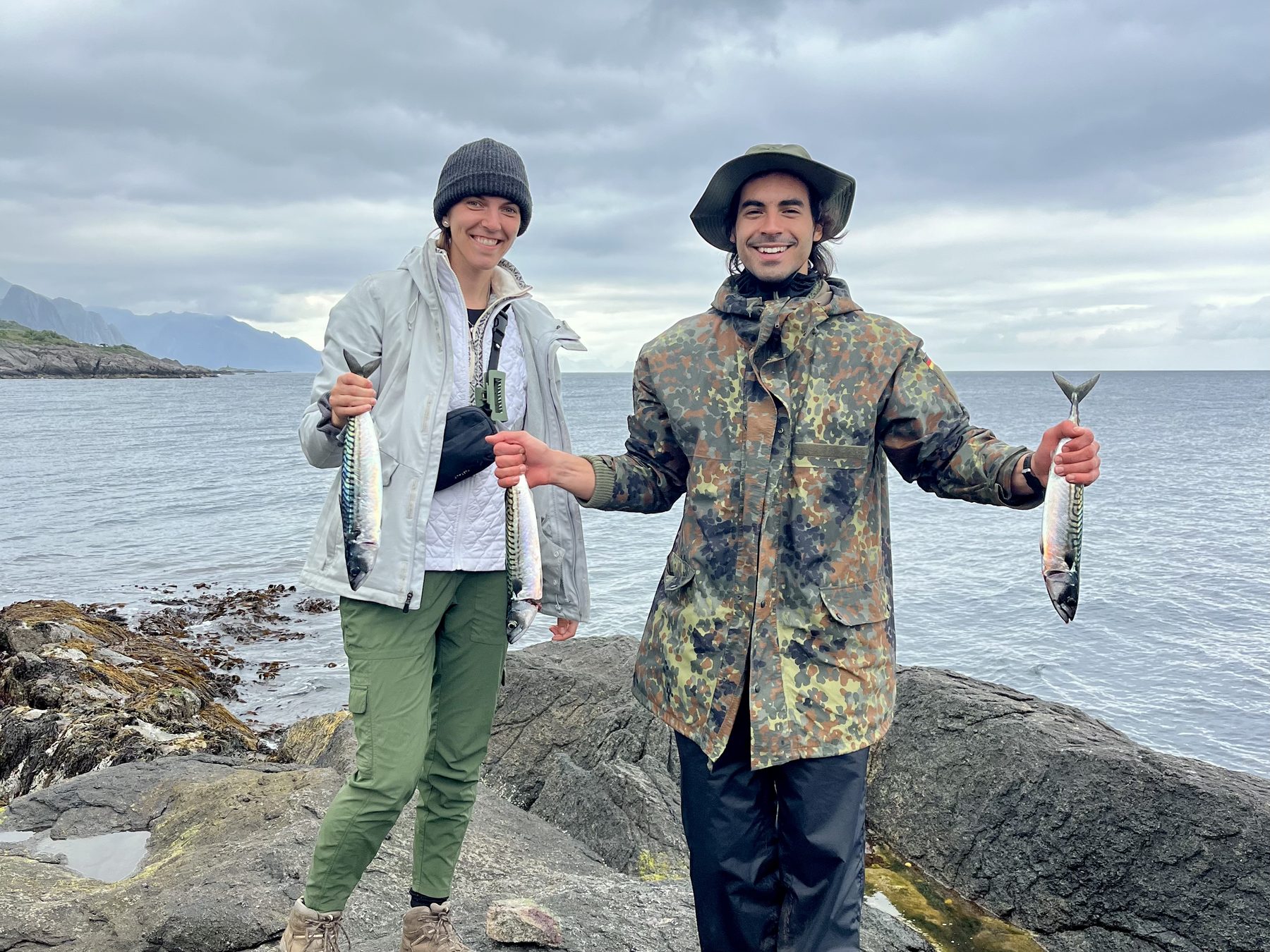
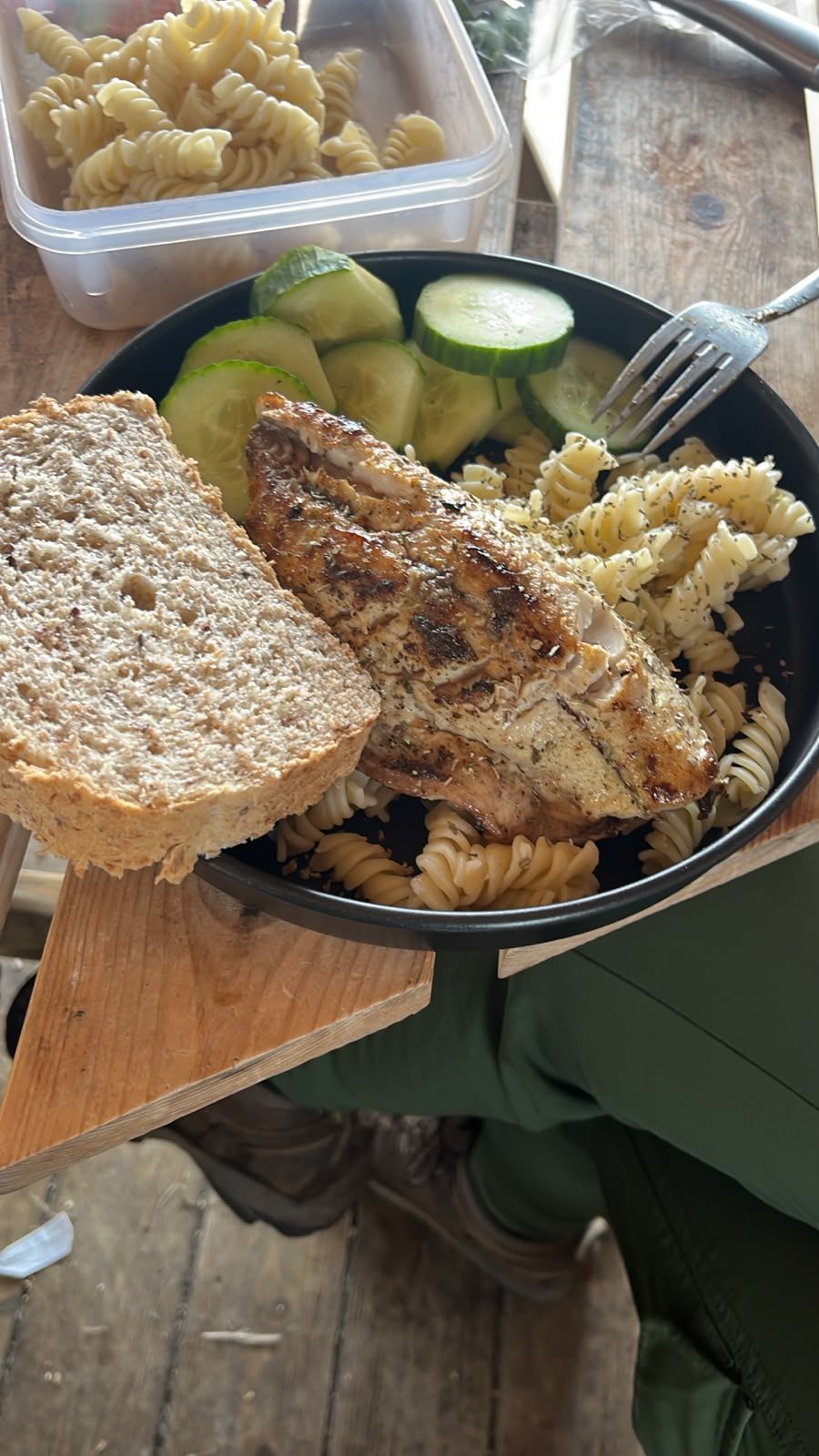
At the campsite I went fishing again, and the evening turned into the wildest session I've ever had: a fish on nearly every cast, mostly mackerel. We ate them that evening while watching the Norwegian football match, which started well and ended badly.
Å and Reinebringen
We had about three days left. One of them was spent in Å, a cute little fishing village at the southern end of Lofoten. It was just a short trip, including some hitchhiking because we had missed the bus again, but it still worked out well. Back at the camp I showed my friends how to fish for mackerel, which they seemed to enjoy a lot. Maybe I spoiled them a bit.
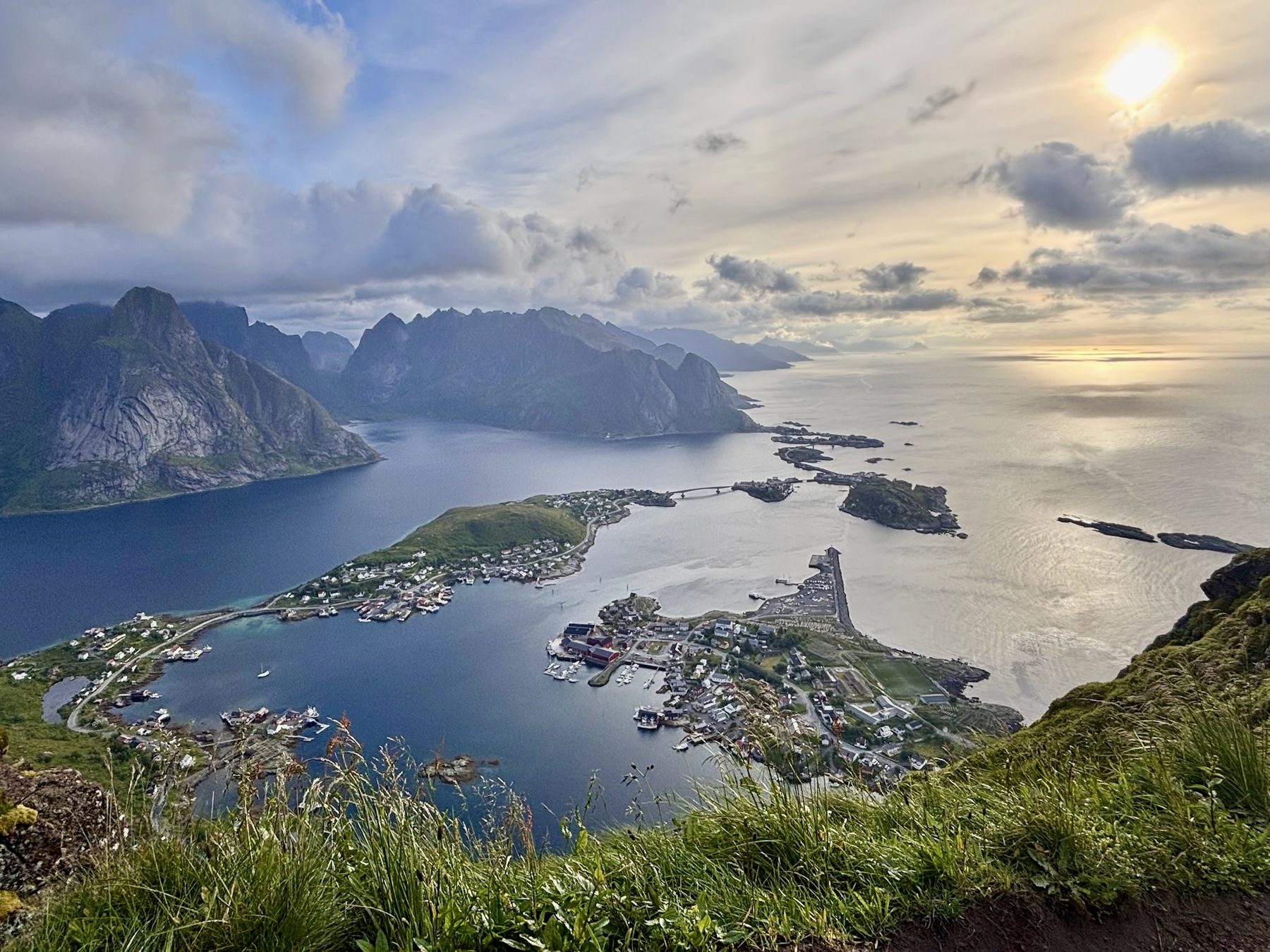
That evening we climbed Reinebringen, rushing up to catch the evening light and take pictures before heading back down.
Værøy and the helicopter home
The next day we took the ferry to Værøy, which was free like the first one. The weather was bad, very windy and cloudy, and the clouds were so low that the famous viewpoint at Håen showed us nothing. It was disappointing, but we hoped the helicopter would still work out.
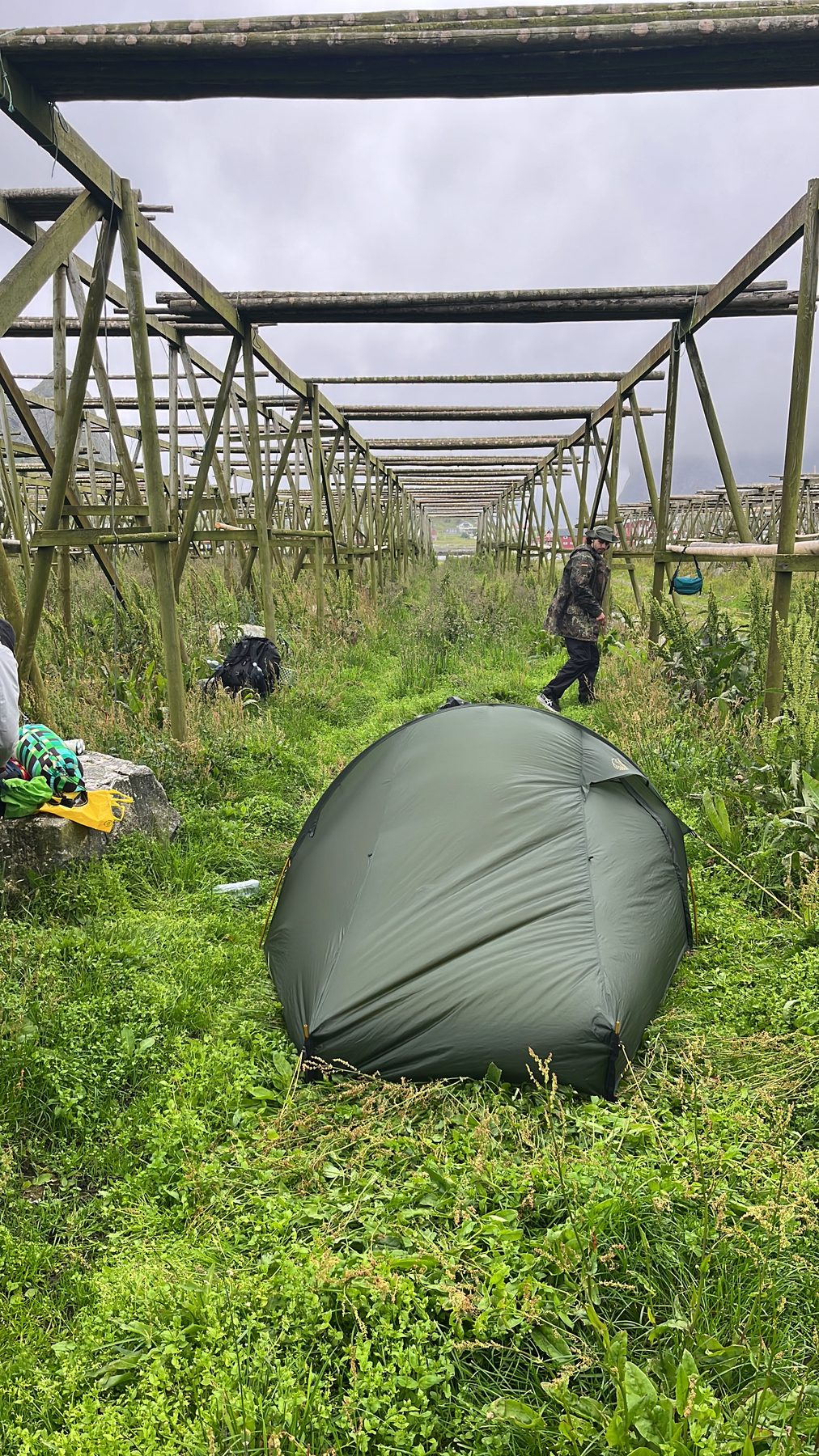
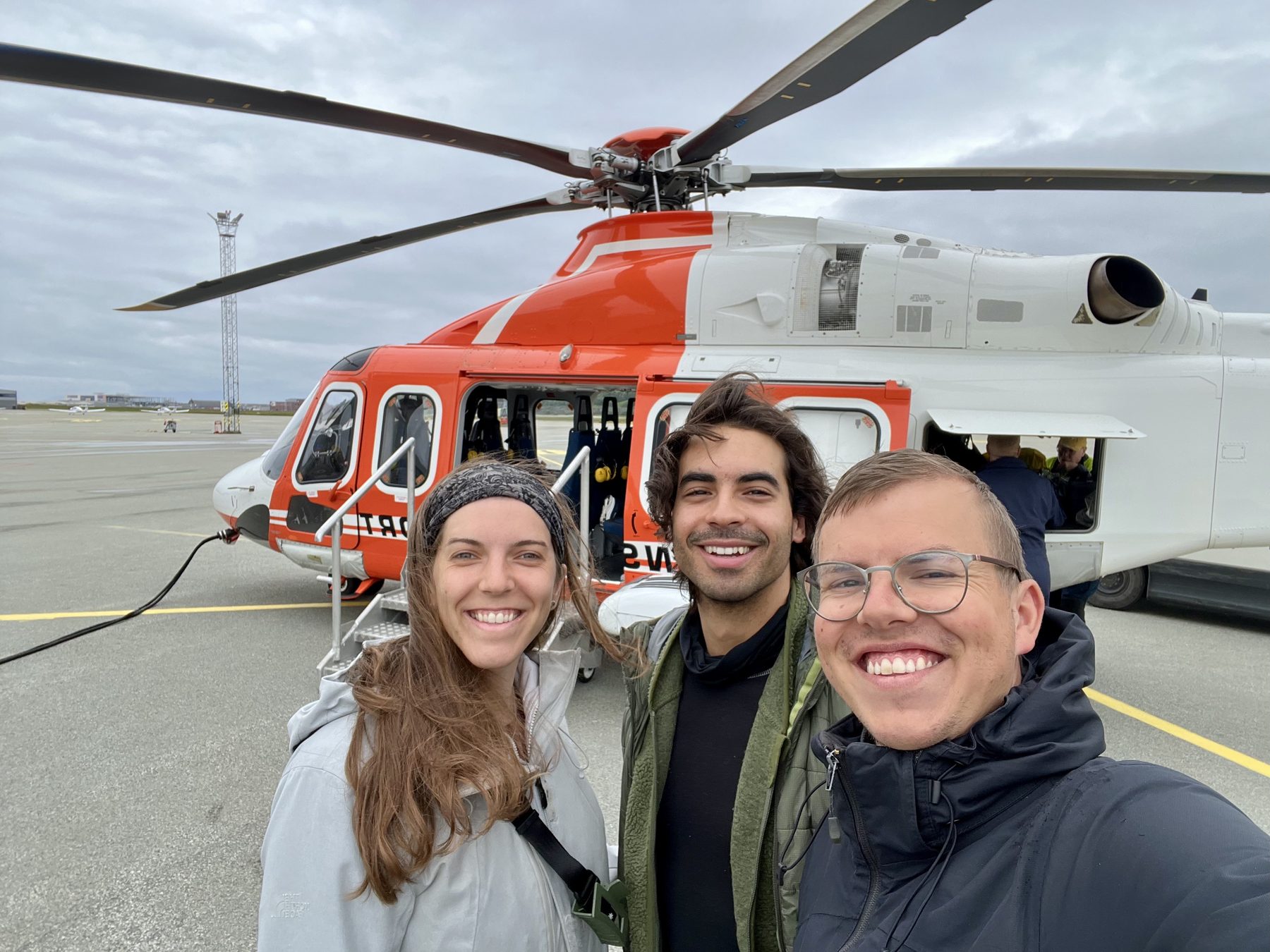
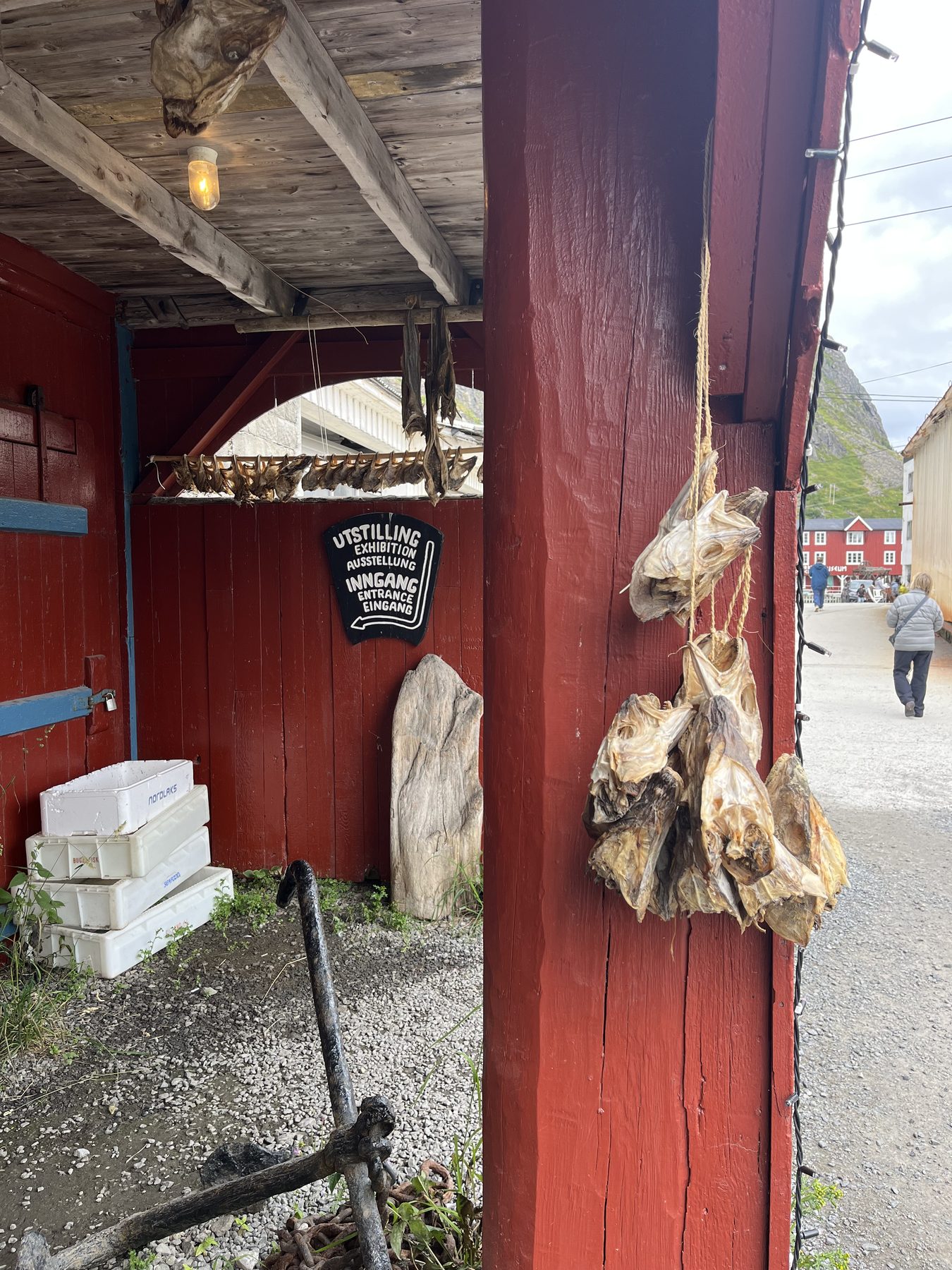
It did. After a night under the dry fish racks, on the 14th we were at the heliport at 9 a.m., the helicopter was ready, and we flew back to Bodø for just €65. It was a real highlight to end on, even though the weather stayed mixed. Still, with the Mediterranean sitting at 40 degrees, I was happy with our 17.